How Mosques & Communities Manage Zabiha

Zabiha meat plays a central role in Muslim communities, particularly during special occasions such as Eid al-Adha, community events, and charitable initiatives. Mosques often serve as the organizational hub for managing Zabiha processes, ensuring that religious guidelines are followed, meat is distributed fairly, and community needs are met. Through coordination, transparency, and volunteer efforts, mosque communities successfully manage Zabiha in a way that upholds both spiritual and social responsibilities.
This article explores how mosques organize, supervise, and distribute Zabiha meat efficiently and ethically.
1. Planning and Coordination
Effective Zabiha management begins with careful planning. Mosque committees typically:
-
Announce Qurbani or Zabiha programs weeks in advance.
-
Collect registrations and payments from community members.
-
Estimate the number of animals required based on participation.
-
Coordinate with certified halal farms or slaughterhouses.
A designated Zabiha or Qurbani committee is often formed to oversee logistics, finances, and compliance with Islamic guidelines. Clear planning prevents confusion and ensures smooth operations.
2. Partnering with Certified Halal Suppliers
Mosques work closely with trusted farms and slaughterhouses to ensure compliance with Zabiha standards. These partnerships ensure:
-
Animals are healthy and properly cared for.
-
Slaughter is performed by trained Muslims.
-
The name of Allah is recited at the time of slaughter.
-
Blood is properly drained according to Islamic law.
Many mosques choose suppliers with halal certification and transparent processes. This builds trust within the community and ensures that religious obligations are fulfilled correctly.
3. Ensuring Proper Slaughter and Supervision
In some communities, mosque representatives visit slaughter sites to supervise the process. Their responsibilities may include:
-
Confirming that Zabiha procedures are followed accurately.
-
Ensuring humane treatment of animals.
-
Verifying hygiene and food safety standards.
-
Monitoring the correct distribution of meat portions.
Supervision reinforces accountability and reassures donors that their sacrifice has been properly carried out.
4. Organized Distribution Systems
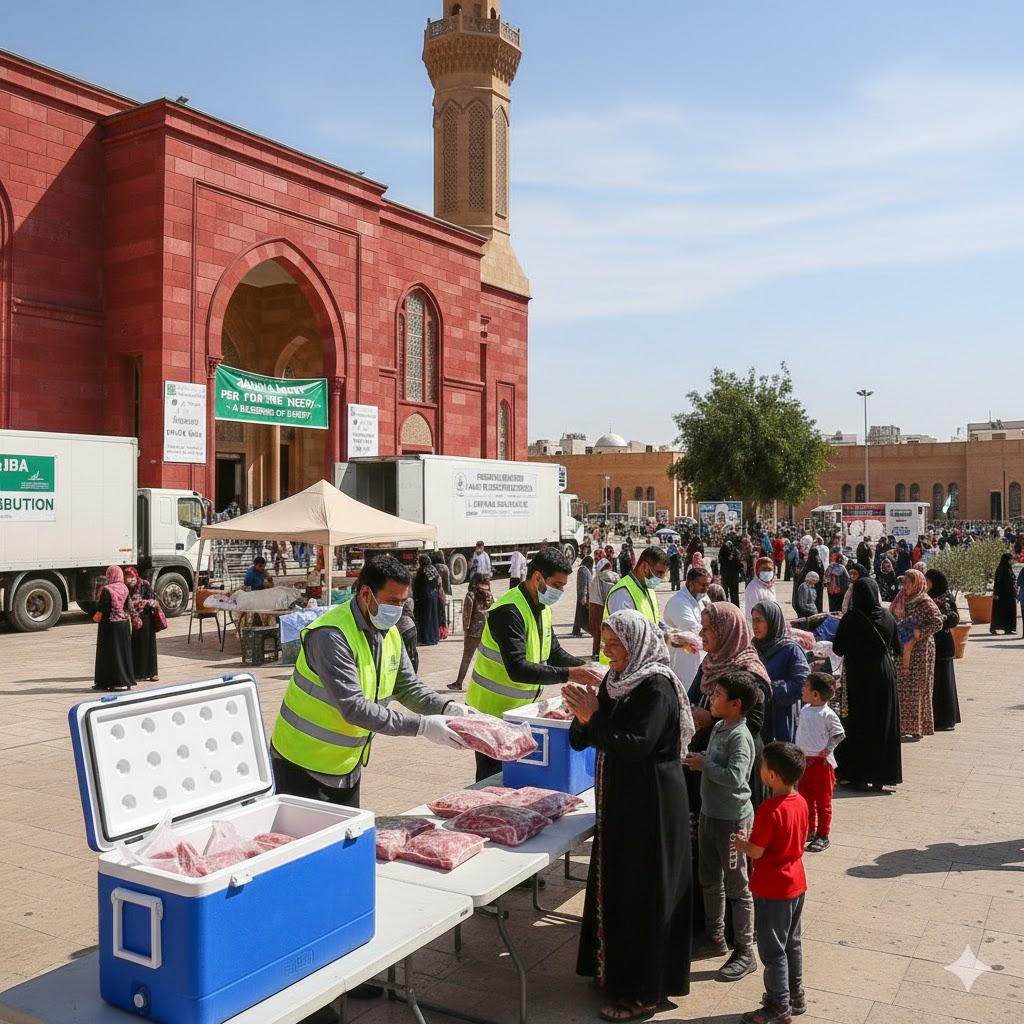
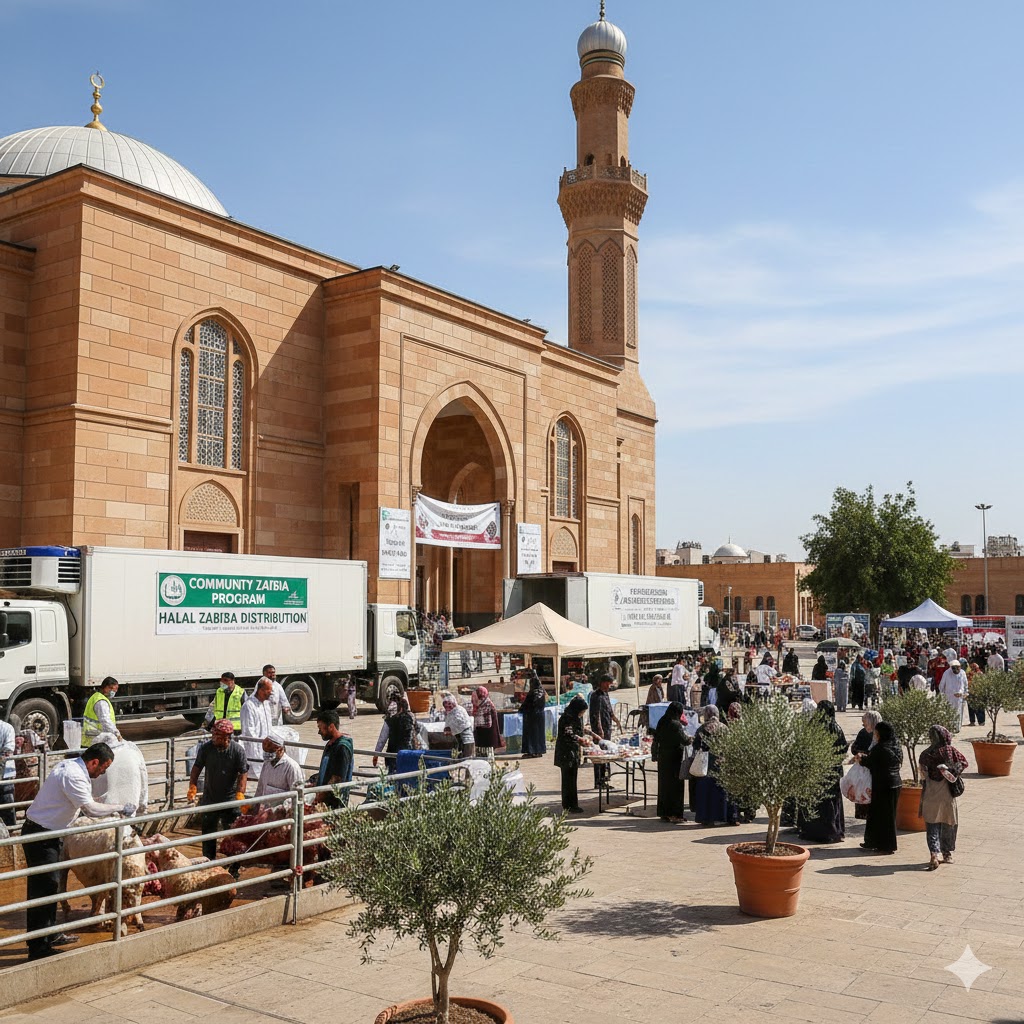
One of the most important roles mosques play is distributing Zabiha meat fairly and efficiently. This typically involves:
-
Dividing meat into standardized portions.
-
Labeling packages for families, donors, and the needy.
-
Creating pickup schedules to prevent overcrowding.
-
Delivering meat to elderly or homebound individuals.
Special care is taken to prioritize underprivileged families. In many cases, mosque leaders maintain confidential lists of families in need to ensure respectful and discreet distribution.
5. Community Volunteers
Volunteers are the backbone of mosque-based Zabiha programs. They assist with:
-
Packaging and labeling meat.
-
Organizing distribution lines.
-
Cleaning and maintaining hygiene standards.
-
Delivering meat to remote households.
These efforts foster unity and teamwork. Participating in Zabiha distribution strengthens bonds within the mosque and encourages a culture of service.
6. Hygiene and Food Safety Measures
Mosques prioritize food safety to protect public health. Measures often include:
-
Using gloves and sanitized surfaces during packaging.
-
Storing meat in refrigerated environments.
-
Distributing meat promptly to prevent spoilage.
-
Following local health regulations.
Maintaining high hygiene standards ensures that the meat remains fresh, safe, and suitable for consumption.
7. Transparency and Financial Accountability
Trust is essential in mosque-led Zabiha programs. To maintain transparency, mosques:
-
Provide clear breakdowns of costs.
-
Share updates on the number of animals sacrificed.
-
Inform donors when and where meat is distributed.
-
Offer receipts and confirmations of participation.
Open communication strengthens community confidence and encourages future participation.
8. International and Charitable Outreach
Many mosques extend their Zabiha efforts beyond local communities. They may partner with international organizations to:
-
Distribute meat in impoverished regions.
-
Support refugee camps.
-
Provide protein to communities facing food insecurity.
Through these initiatives, mosque communities transform local acts of worship into global humanitarian efforts.
9. Educational Role of Mosques
Mosques also educate the community about Zabiha principles:
-
Explaining proper slaughter guidelines.
-
Teaching the importance of sharing with the needy.
-
Encouraging responsible meat handling and storage.
-
Promoting environmental awareness and waste reduction.
By combining education with action, mosques help preserve both religious knowledge and ethical practices.
Conclusion
Mosque communities play a vital role in managing Zabiha, ensuring that religious standards, humane treatment, and fair distribution are upheld. Through careful planning, certified partnerships, volunteer support, hygiene measures, and transparent operations, mosques create organized systems that benefit the entire community.
More than just a logistical effort, managing Zabiha through the mosque strengthens unity, promotes generosity, and fulfills an essential spiritual duty. It transforms individual acts of sacrifice into collective acts of compassion, nourishing both bodies and hearts within the community.