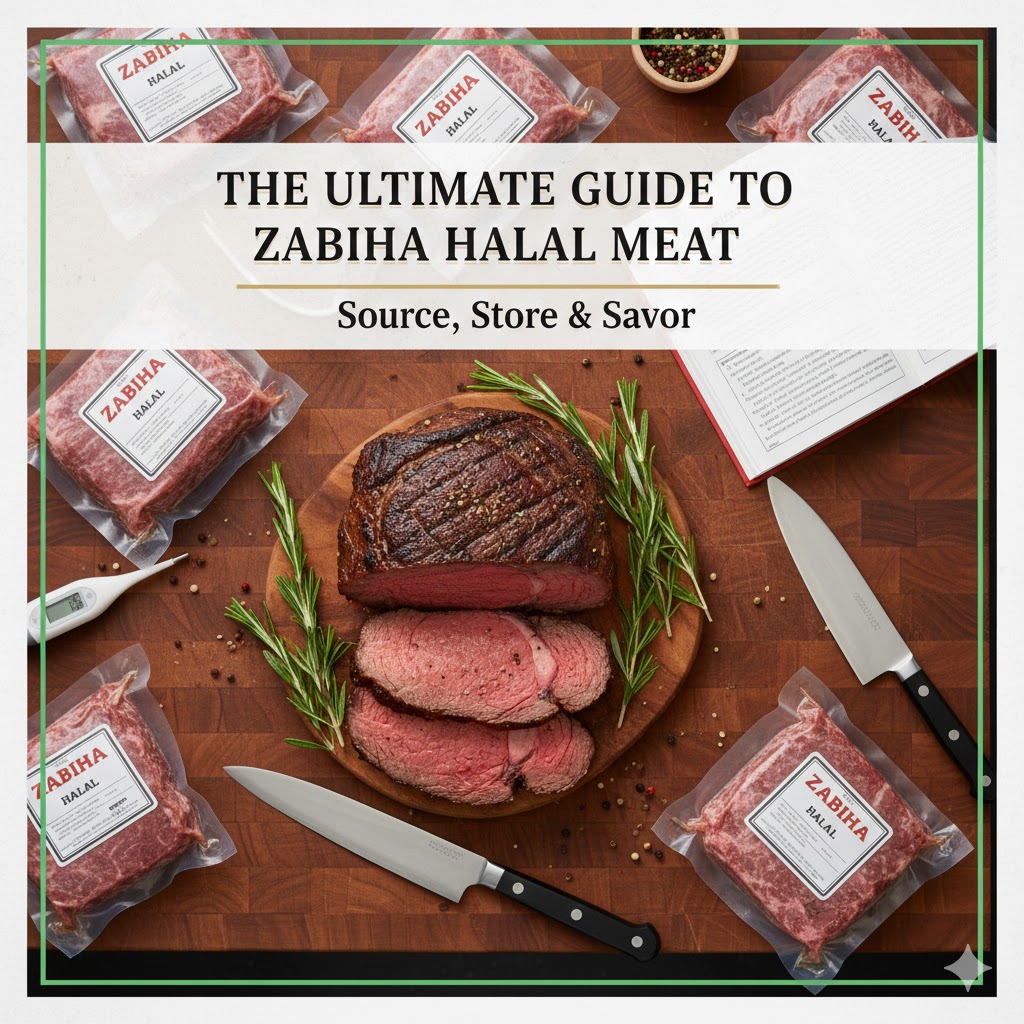
How to Thaw Zabiha Meat Safely

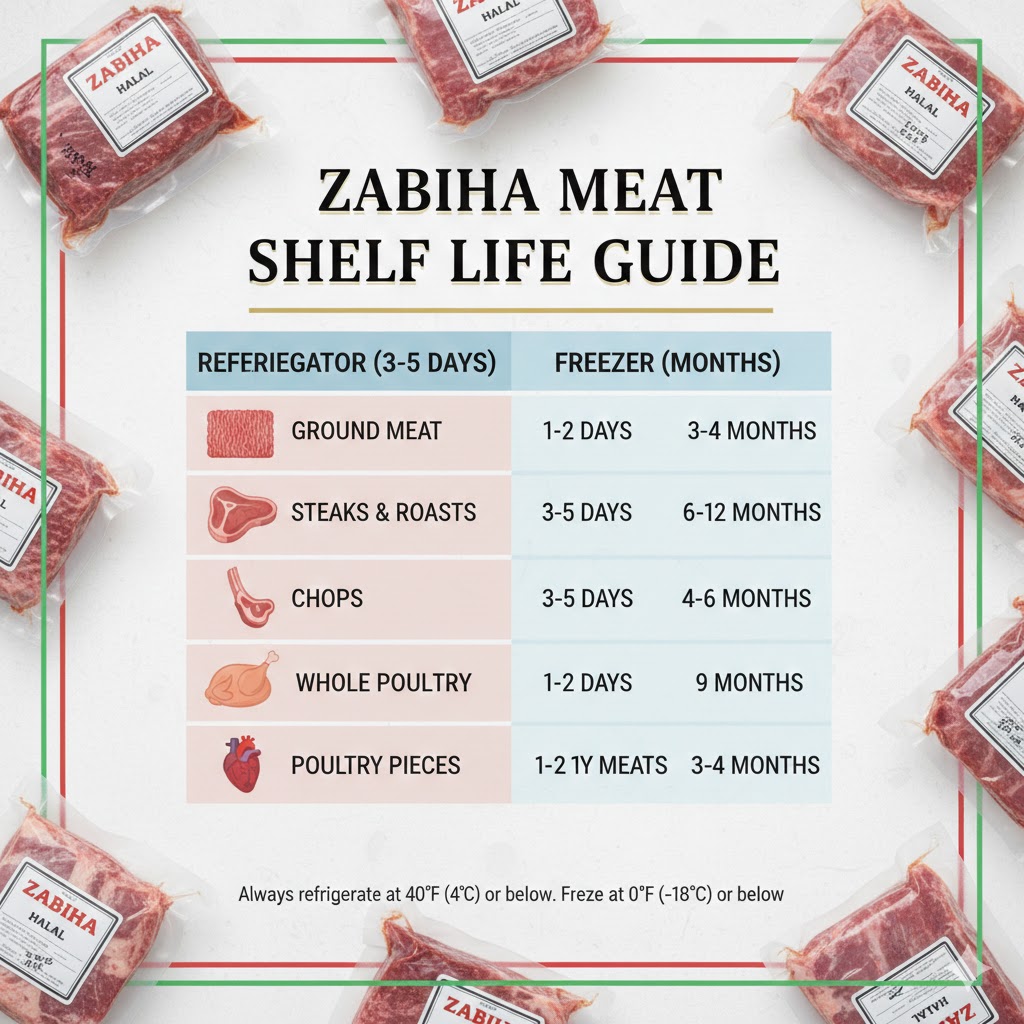
Zabiha meat is a staple in many Muslim households, especially during festivals like Eid al-Adha and Ramadan. Proper handling of this meat is crucial to preserve its flavor, tenderness, and most importantly, food safety. One of the most common challenges is thawing frozen Zabiha meat. Improper thawing can lead to bacterial growth, uneven cooking, and loss of flavor. This guide provides step-by-step instructions and tips for thawing Zabiha meat safely while maintaining its quality and nutritional value.
Why Proper Thawing Matters
Thawing meat incorrectly can compromise both safety and taste:
-
Bacterial Growth: When meat is left at room temperature for too long, bacteria multiply rapidly.
-
Texture Loss: Sudden temperature changes can cause meat fibers to break down, making the meat dry or mushy.
-
Uneven Cooking: Partially frozen meat cooks unevenly, leading to undercooked or overcooked portions.
Following safe thawing methods ensures your Zabiha meat is tender, flavorful, and safe to eat.
Safe Thawing Methods
There are three primary methods to thaw Zabiha meat safely:
1. Refrigerator Thawing (Recommended)
-
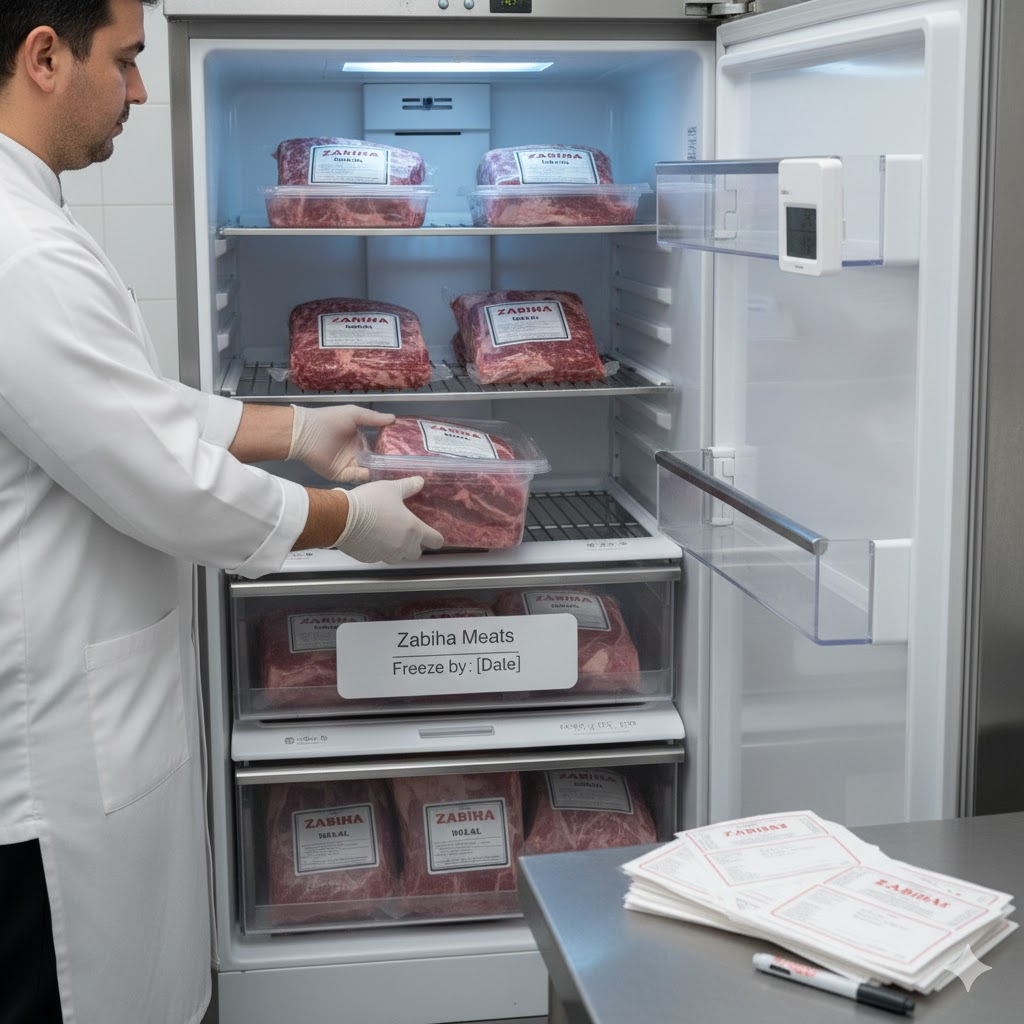
Process: Place the frozen meat in a container or plate to catch any drips and leave it in the refrigerator at 1–4°C.
-
Time Required: Small cuts like chicken breasts thaw in 12–24 hours, while larger cuts like lamb leg or beef shank may take 24–48 hours.
-
Benefits: Maintains a safe temperature, prevents bacterial growth, and preserves flavor and texture.
-
Tip: Plan ahead—refrigerator thawing requires time but is the safest method.
2. Cold Water Thawing
-
Process: Place the meat in a sealed plastic bag and submerge it in cold water. Change the water every 30 minutes.
-
Time Required: Small cuts may thaw in 1–2 hours; larger cuts may take 3–4 hours.
-
Benefits: Faster than refrigerator thawing while keeping meat safe.
-
Precautions: Ensure the meat is sealed to prevent water contact and contamination. Cook immediately after thawing.
3. Microwave Thawing
-
Process: Use the “defrost” function on your microwave. Follow manufacturer guidelines based on weight and type of meat.
-
Benefits: Quick and convenient for small portions.
-
Precautions: Microwave thawing can partially cook the meat, so it should be cooked immediately afterward to avoid bacterial growth.
Tips for Handling Zabiha Meat During Thawing
-
Keep Meat Sealed: Prevent exposure to air, moisture, or contaminants.
-
Use a Tray or Plate: Catch any juices that may leak during thawing to avoid cross-contamination.
-
Avoid Room Temperature Thawing: Leaving meat out on the counter increases bacterial risk and affects texture.
-
Plan Ahead: Start thawing large cuts at least 24 hours before cooking.
-
Check for Freshness: Once thawed, meat should smell fresh, be firm to the touch, and have a bright color.
Cooking Tips After Thawing
Proper thawing is only the first step; cooking Zabiha meat correctly ensures maximum flavor and nutrition:
-
Uniform Pieces: Cut meat into even portions to cook evenly.
-
Marinate for Tenderness: Use yogurt, lemon juice, or spices for tougher cuts.
-
Monitor Cooking Time: Avoid overcooking, which can make previously frozen meat dry.
-
Resting Meat: Allow meat to rest after cooking to retain juices and tenderness.
Common Mistakes to Avoid
-
Thawing in Hot Water: Rapid thawing in hot water can partially cook meat and increase bacterial risk.
-
Refreezing Thawed Meat: Refreezing can degrade flavor, texture, and safety. Only refreeze if meat has been thawed in the refrigerator and not left out.
-
Skipping Hygiene Practices: Always sanitize surfaces, knives, and cutting boards used for thawed meat.
Quick Tips for Busy Kitchens
-
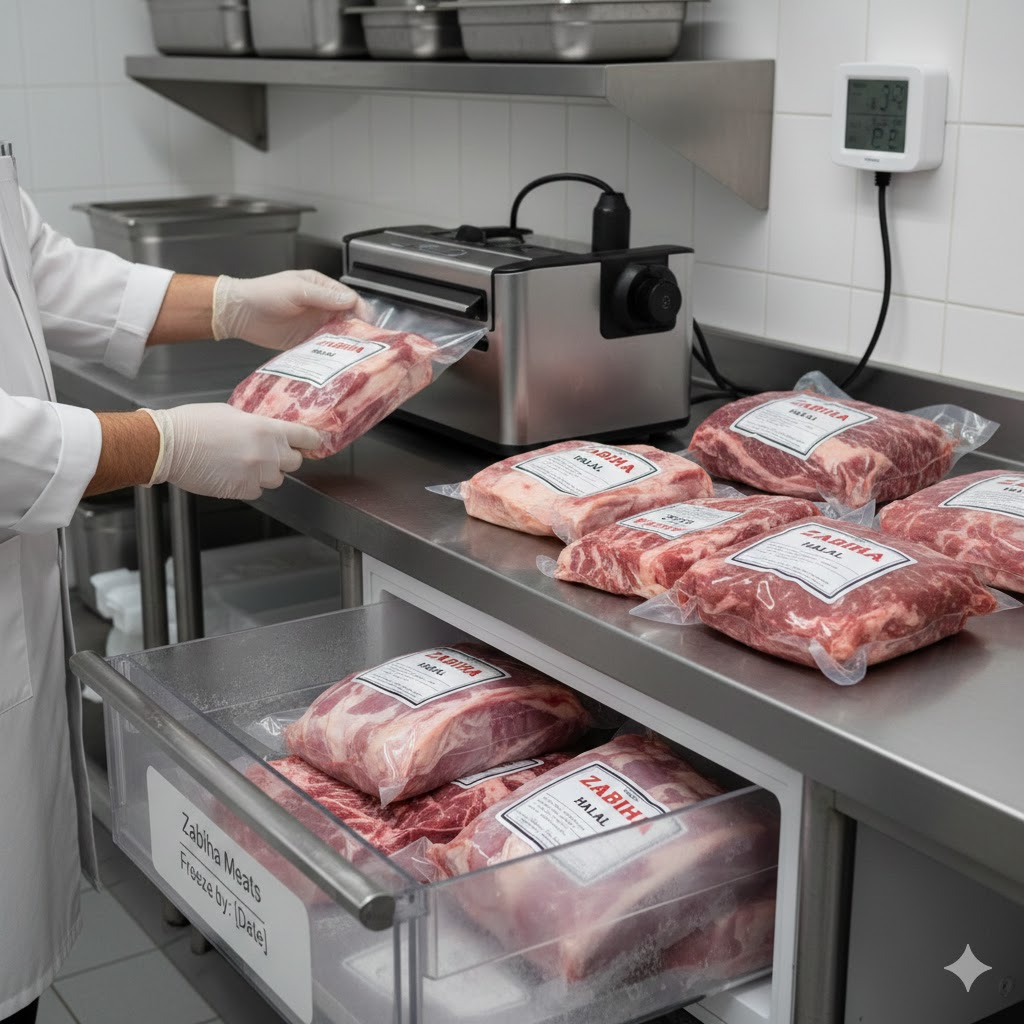
Plan Freezer Storage: Store Zabiha meat in portioned packs to make thawing faster.
-
Use a Cold Water Shortcut: If you’re short on time, cold water thawing is safe and effective.
-
Cook Directly From Frozen (If Necessary): Smaller pieces like chicken breasts or kebabs can be cooked from frozen, but adjust cooking time accordingly.
Conclusion
Thawing Zabiha meat safely is essential for both food safety and culinary quality. Using refrigerator thawing, cold water thawing, or microwave thawing ensures the meat remains safe to eat, retains its flavor, and cooks evenly. Avoiding room temperature thawing, handling meat hygienically, and planning ahead are key steps in preserving the natural taste and tenderness of Zabiha meat.
By following these methods, you can enjoy delicious, tender, and safe Zabiha meat in your daily meals or special dishes for festive occasions. Proper thawing is not just a safety practice—it’s the foundation for perfect meals that honor tradition, nutrition, and flavor.