Best Practices for Refrigerating Zabiha Meat

Zabiha meat holds a special place in Muslim households, particularly during festive occasions like Eid al-Adha or for regular halal meals. Proper refrigeration is crucial to maintain its freshness, tenderness, and nutritional value. Mishandling or improper storage can lead to spoilage, bacterial growth, and loss of flavor. This guide outlines the best practices for refrigerating Zabiha meat, ensuring safety, quality, and optimal cooking results.
Why Proper Refrigeration Matters
Refrigeration slows bacterial growth, preserves flavor, and maintains the texture of meat. Even though Zabiha meat is prepared according to Islamic law, the way it is stored afterward affects:
-
Safety: Prevents harmful bacteria like Salmonella or E. coli from multiplying.
-
Flavor: Proper storage preserves natural taste and aroma.
-
Texture: Avoids dryness or toughness caused by improper chilling.
-
Shelf Life: Extends usability for daily meals or planned cooking.
Using correct techniques for refrigeration ensures that Zabiha meat remains safe, delicious, and suitable for a variety of dishes.
Temperature Guidelines
Maintaining the right temperature is the first step in proper storage:
-
Refrigerator Temperature: Keep Zabiha meat at 1–4°C (34–39°F).
-
Avoid Fluctuations: Frequent temperature changes accelerate spoilage.
-
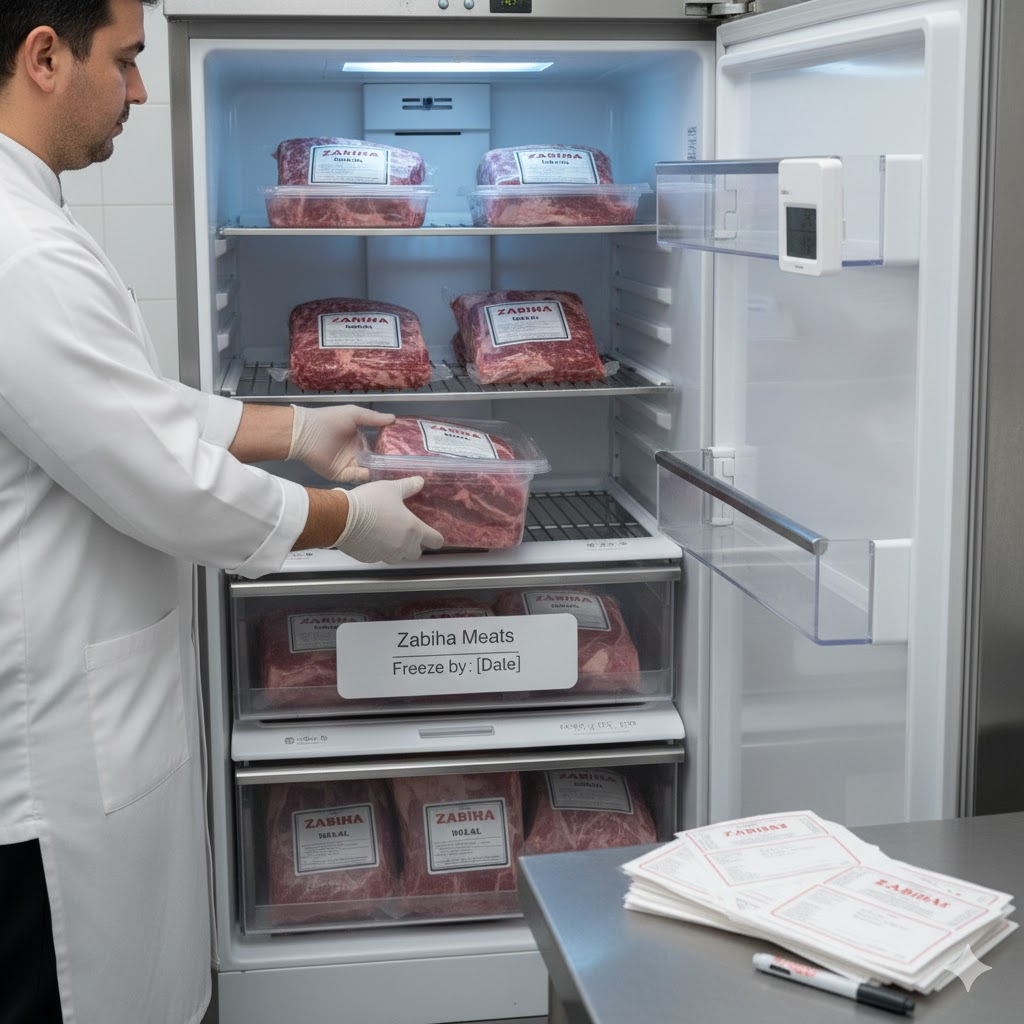
Check Thermometer: Place a refrigerator thermometer to monitor consistent cooling.
Preparing Zabiha Meat for Refrigeration
Before placing meat in the fridge, preparation is key:
-
Portion Meat: Divide large cuts into meal-sized portions for easier thawing and cooking.
-
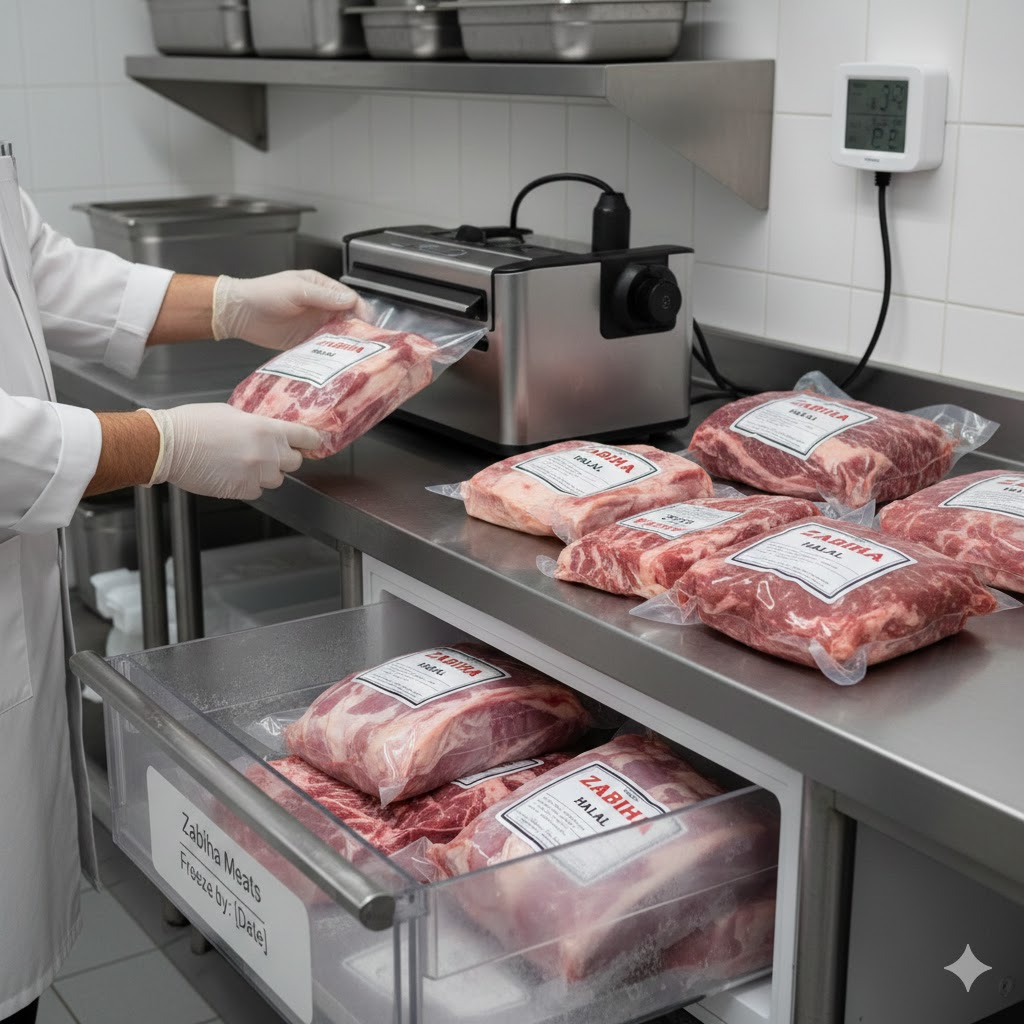
Wrap Properly: Use airtight packaging like vacuum-sealed bags, plastic wrap, or freezer-safe containers. This prevents exposure to air, which can dry out meat or cause odor absorption.
-
Label Packages: Include the type of meat, cut, and date of storage. This ensures you use older meat first and avoid spoilage.
-
Trim Excess Fat: While some fat adds flavor, too much can spoil faster in the refrigerator.
Organizing the Refrigerator
Proper placement helps maintain hygiene and prevent cross-contamination:
-
Bottom Shelf: Store raw Zabiha meat on the lowest shelf to prevent juices from dripping onto other foods.
-
Separate from Ready-to-Eat Foods: Keep meat away from fruits, vegetables, and cooked items.
-
Dedicated Containers: Use separate trays or containers for different types of meat, such as chicken, lamb, beef, or goat.
-
Avoid Overcrowding: Refrigerators need airflow to maintain consistent temperature.
Duration for Refrigerating Zabiha Meat
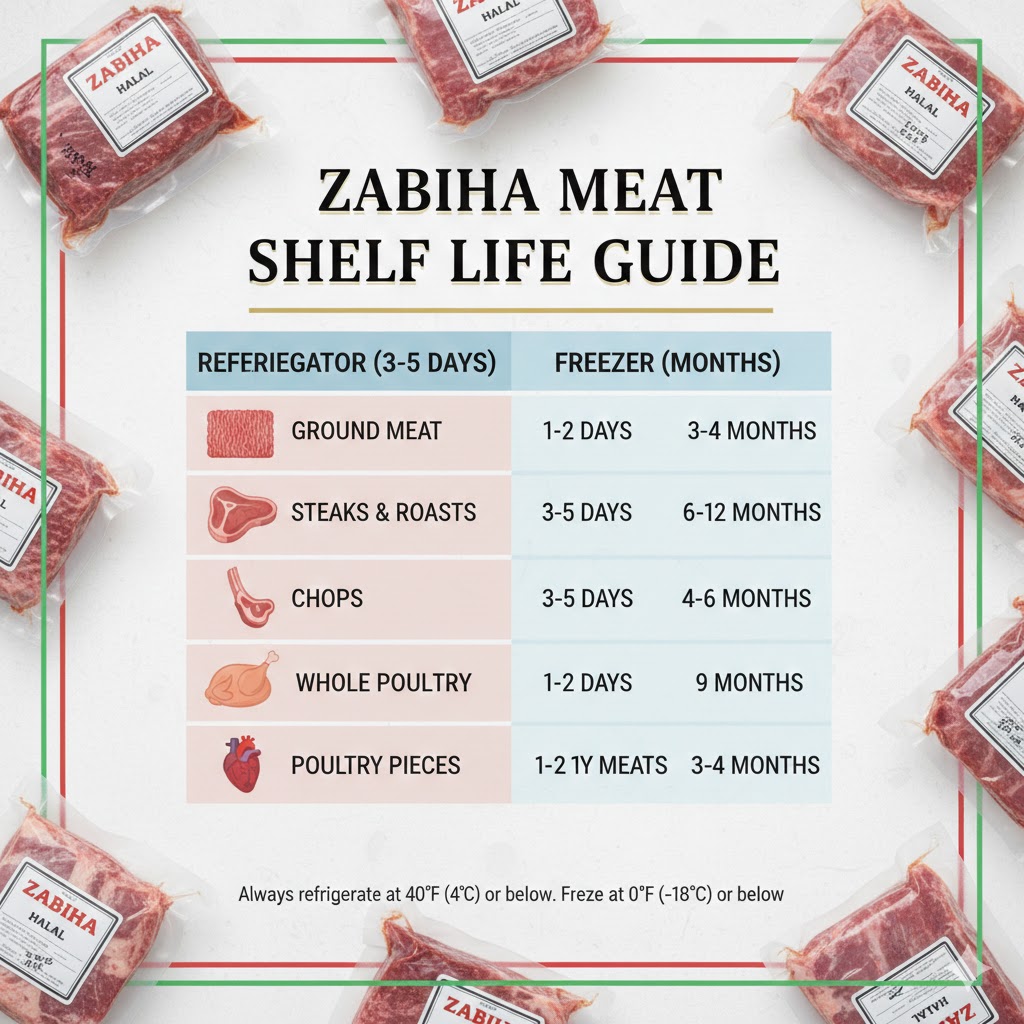
The shelf life depends on the type of meat and whether it is raw or cooked:
-
Raw Chicken: 1–2 days
-
Raw Lamb/Goat: 3–5 days
-
Raw Beef: 3–5 days
-
Cooked Meat (all types): 3–4 days
Always prioritize using the oldest meat first to reduce waste.
Freezing for Longer Storage
When meat will not be used within a few days, freezing is recommended:
-
Freezer Temperature: Maintain at −18°C (0°F) or below.
-
Packaging: Vacuum-sealed or airtight containers prevent freezer burn.
-
Portioning: Freeze in meal-sized packs for easy thawing.
-
Thawing: Thaw in the refrigerator or using cold water methods—avoid leaving meat at room temperature.
Hygiene and Safety Practices
Maintaining hygiene is critical for safe refrigeration:
-
Clean Surfaces: Wash hands, knives, cutting boards, and storage containers thoroughly before and after handling meat.
-
Separate Boards: Use separate cutting boards for raw meat and vegetables.
-
Check for Spoilage: Discard meat with off smells, slimy texture, or discoloration.
Tips for Preserving Flavor and Texture
-
Marinate Before Refrigerating: For tougher cuts like goat or lamb, marinate in yogurt, lemon juice, or spices before storing to enhance flavor and tenderness.
-
Minimal Exposure to Air: Seal packaging tightly to prevent drying and odor absorption.
-
Use Fresh Meat: The fresher the meat at the time of refrigeration, the longer it will last.
-
Rotate Stock: Use older meat first and avoid long-term storage beyond recommended periods.
Common Mistakes to Avoid
-
Leaving Zabiha meat at room temperature before refrigeration.
-
Overcrowding the fridge and restricting airflow.
-
Using non-airtight packaging, leading to odor absorption and freezer burn.
-
Refreezing thawed meat without proper handling.
-
Ignoring expiration dates or signs of spoilage.
Conclusion
Proper refrigeration is essential to maintaining the quality, flavor, and safety of Zabiha meat. By following best practices—such as portioning, airtight packaging, correct temperature maintenance, and proper organization—you can maximize shelf life while ensuring every meal is tender, flavorful, and safe.
Whether preparing daily meals or special dishes for festive occasions, handling Zabiha meat with care in the refrigerator is the first step toward successful cooking and satisfying, halal-compliant meals.