Fat Content in Zabiha Meat Explained

Zabiha meat, prepared according to halal standards, is ethically sourced and widely consumed for its nutritional and culinary benefits. Understanding the fat content in Zabiha meat is essential for making informed choices about cooking methods, portion sizes, and meal planning. Fat in meat is not only a source of energy but also influences flavor, texture, and juiciness, making it a critical component of a balanced diet.
This guide explains the types of fat in Zabiha meat, how they affect health, and tips for cooking and consumption to maximize nutrition without compromising taste.
1. Types of Fat in Zabiha Meat
Zabiha meat contains two main types of fat:
a) Saturated Fat
-
Found mostly in red meats like lamb and beef.
-
Contributes to flavor and tenderness.
-
High consumption may impact cholesterol levels if not balanced with other foods.
b) Unsaturated Fat
-
Found in chicken and lean cuts of lamb or beef, including monounsaturated and polyunsaturated fats.
-
Supports heart health, brain function, and hormone production.
-
Often found near muscle fibers rather than in visible fat.
Zabiha meat provides a mix of these fats, which, when managed properly, can contribute to a nutritious and balanced diet.
2. Fat Content in Different Zabiha Meats
Understanding how fat varies across meat types helps in making healthier choices:
-
Zabiha Chicken (skinless breast): ~3g fat per 100g, low in saturated fat, high in protein.
-
Zabiha Chicken (thigh with skin): ~8g fat per 100g, more flavor, slightly higher calories.
-
Zabiha Lamb (loin chop, trimmed): ~9–12g fat per 100g, rich in flavor, moderate saturated fat.
-
Zabiha Lamb (rib chop, untrimmed): ~15–18g fat per 100g, higher saturated fat, very tender.
-
Zabiha Beef (sirloin, lean): ~8g fat per 100g, contains essential fatty acids.
-
Zabiha Beef (ribeye, untrimmed): ~20g fat per 100g, flavorful but calorie-dense.
Trimming excess fat and choosing lean cuts can reduce overall fat intake without losing flavor.
3. How Fat Affects Cooking
Fat influences flavor, moisture retention, and texture in meat:
-
Tenderness: Intramuscular fat (marbling) keeps meat juicy when cooked.
-
Flavor: Fat carries flavor compounds and enhances the overall taste.
-
Cooking methods: Lean cuts may dry out quickly; moderate fat cuts benefit from slow cooking, grilling, or roasting.
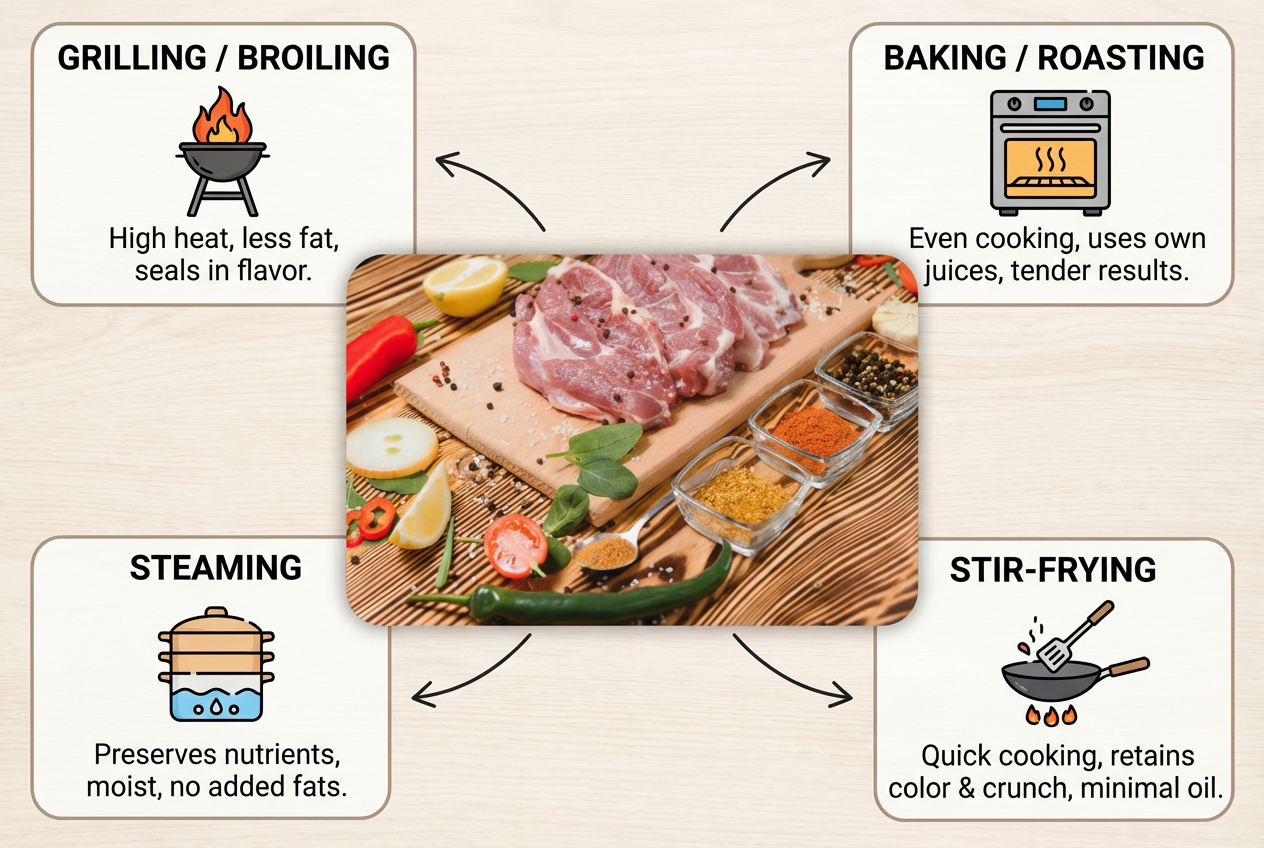
For Zabiha meat, balancing fat content with healthy cooking methods like grilling, baking, or steaming ensures tender, flavorful, and nutritious results.
4. Health Implications
Fat in Zabiha meat has both benefits and considerations:
Benefits
-
Provides essential fatty acids needed for cell function.
-
Supports fat-soluble vitamin absorption (A, D, E, K).
-
Enhances satiety, helping prevent overeating.
Considerations
-
High intake of saturated fat can affect cholesterol levels and heart health.
-
Processed or excessively fatty cuts may increase calorie consumption.
-
Moderation and lean cuts are key for balanced nutrition.
Choosing the right cuts and cooking methods allows you to enjoy Zabiha meat without compromising health.
5. Tips for Managing Fat Intake
-
Trim visible fat: Remove excess fat before cooking to lower saturated fat content.
-
Choose lean cuts: Skinless chicken, lamb loin, and sirloin beef are ideal for lower fat meals.
-
Use healthy cooking methods: Grilling, baking, steaming, and poaching reduce the need for added fats.
-
Pair with vegetables and grains: Adding fiber-rich foods balances meal nutrition.
-
Moderate portion sizes: 100–150g of cooked meat per serving is generally sufficient.
These practices maintain flavor while keeping meals health-conscious.
6. Flavor vs. Fat Balance
While lower fat is healthier, some fat is essential for taste and texture:
-
Marbling in beef and lamb provides richness.
-
Skin-on chicken offers juiciness for curries or roasting.
-
Combining lean cuts with healthy fats like olive oil can replicate flavor without overconsumption.
This balance allows you to enjoy Zabiha meat deliciously and responsibly.
7. Practical Examples
-
Grilled Zabiha Chicken Breast: Low in fat, high in protein, perfect for salads or sandwiches.
-
Zabiha Lamb Stew (loin cuts): Moderate fat provides flavor; cook slowly with vegetables to create a wholesome, balanced dish.
-
Beef Stir-Fry: Use lean sirloin and minimal oil; vegetables add fiber and nutrients.
These examples demonstrate that flavorful meals and healthy fat management can coexist.
8. Storage and Fat Preservation
-
Store Zabiha meat in a refrigerator (≤4°C / 40°F) and freeze for longer periods.
-
Avoid thawing multiple times; this preserves texture and nutrient integrity.
-
Fat in frozen meat may oxidize if stored too long; use within recommended times.
Proper storage helps maintain freshness, flavor, and nutrient value.
Conclusion
Understanding fat content in Zabiha meat allows home cooks to make informed, health-conscious decisions without sacrificing taste. By selecting lean cuts, trimming visible fat, and using healthy cooking methods, families can enjoy tender, flavorful, and nutritious meals.
Zabiha meat provides high-quality protein, essential fatty acids, and natural flavor, making it a versatile choice for balanced diets. With careful preparation, portion control, and thoughtful cooking, you can enjoy Zabiha meat deliciously, ethically, and healthfully.