Must-Have Tools for Zabiha Meat Recipes

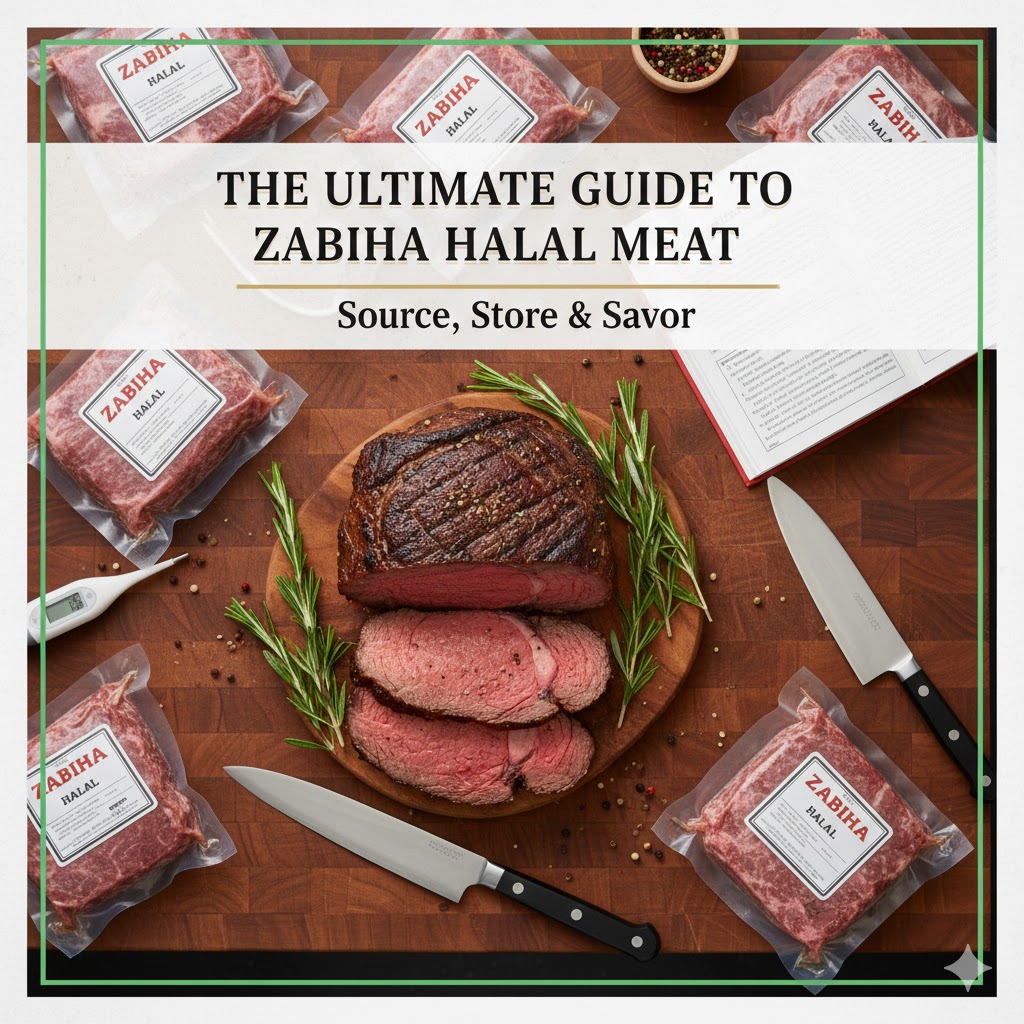
Cooking Zabiha meat requires more than just following Islamic guidelines for slaughter—it also involves proper preparation, handling, and cooking. Using the right tools makes a significant difference in flavor, texture, and ease of cooking, whether you’re preparing daily meals or festive dishes like Eid al-Adha specialties. From cutting and portioning to cooking and serving, having the right equipment ensures that your Zabiha meat recipes are delicious, safe, and efficient.
Understanding the Importance of Tools
Zabiha meat comes from animals slaughtered according to Islamic law, emphasizing humane treatment and spiritual compliance. However, once you bring this meat into your kitchen, proper tools help you:
-
Maintain Hygiene: Prevent cross-contamination and keep meat safe to eat.
-
Enhance Flavor: Correct tools allow even cooking, proper marination, and optimal texture.
-
Save Time: Efficient equipment makes portioning, trimming, and cooking faster.
-
Ensure Consistency: Uniform cuts lead to consistent results in dishes like curries, stews, or kebabs.
Investing in the right tools is an essential step for anyone cooking Zabiha meat regularly.
Essential Cutting and Preparation Tools
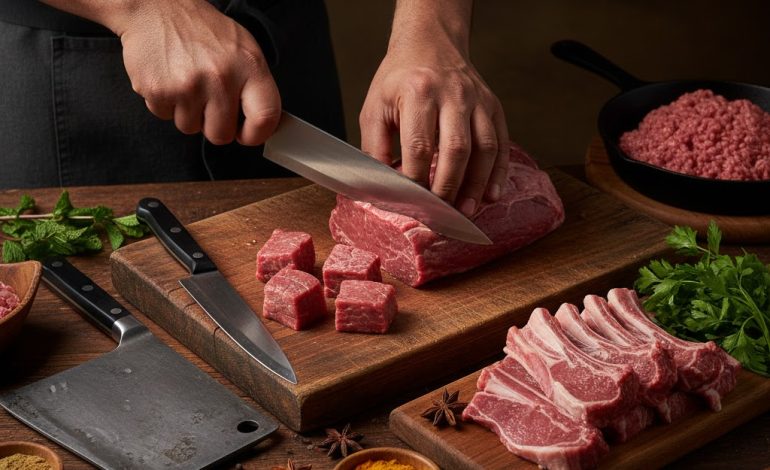
1. Chef’s Knife
-
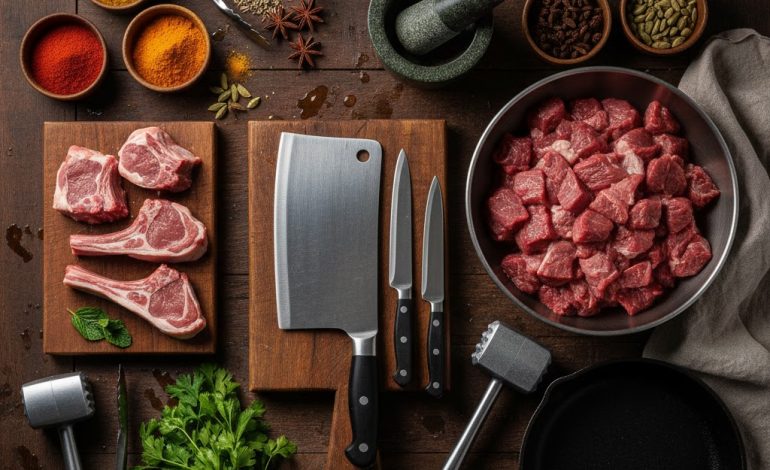
A sharp, high-quality chef’s knife is versatile for slicing, dicing, and trimming meat.
-
Use it to cut portions for curries, kebabs, or roasts.
-
A sharp blade ensures clean cuts, preventing the meat fibers from being crushed.
2. Boning Knife
-
Ideal for separating meat from bones, trimming fat, and handling tougher cuts.
-
Its narrow, flexible blade makes it easier to navigate joints and sinew.
3. Cleaver
-
Perfect for chopping through bones or thick joints.
-
Useful for preparing large cuts like lamb leg or beef shank for slow-cooked dishes.
4. Cutting Board
-
A sturdy, non-slip cutting board is essential for safety.
-
Use separate boards for meat and vegetables to prevent cross-contamination.
-
Plastic or bamboo boards are easier to sanitize, while wooden boards can be more durable.
5. Kitchen Shears
-
Handy for trimming small bones, cartilage, and excess fat.
-
Useful for preparing chicken or smaller cuts where precision is needed.
Tools for Marination and Flavoring
6. Mixing Bowls
-
Deep bowls are needed for marinating meat in yogurt, lemon juice, spices, or sauces.
-
Stainless steel or glass bowls are preferred for hygiene and durability.
7. Marinade Brushes
-
Evenly coat meat with spices, oil, or sauces.
-
Useful for grilled Zabiha meat or oven-roasted dishes to enhance flavor and prevent dryness.
8. Meat Mallet or Tenderizer
-
For tougher cuts like goat or beef shank, a mallet breaks down fibers.
-
Helps tenderize the meat, allowing marinades to penetrate more effectively.
Cooking Tools
9. Heavy-Bottomed Pots
-
Ideal for slow-cooked stews, curries, and braised dishes.
-
Heavy bottoms prevent burning and ensure even heat distribution.
10. Pressure Cooker or Instant Pot
-
Speeds up cooking of tough cuts while retaining moisture and flavor.
-
Great for goat, beef, or lamb cuts requiring long cooking times.
11. Grills and Tandoor Ovens
-
Perfect for kebabs, grilled chops, or roasted Zabiha meat.
-
Adds smoky flavor while keeping the meat juicy and tender.
12. Roasting Trays and Racks
-
For oven-roasted lamb, chicken, or beef.
-
Allows even airflow and browning for a crisp exterior and tender interior.
13. Meat Thermometer
-
Ensures meat is cooked to the desired doneness without overcooking.
-
Important for both flavor and food safety.
Additional Tools for Serving and Storage
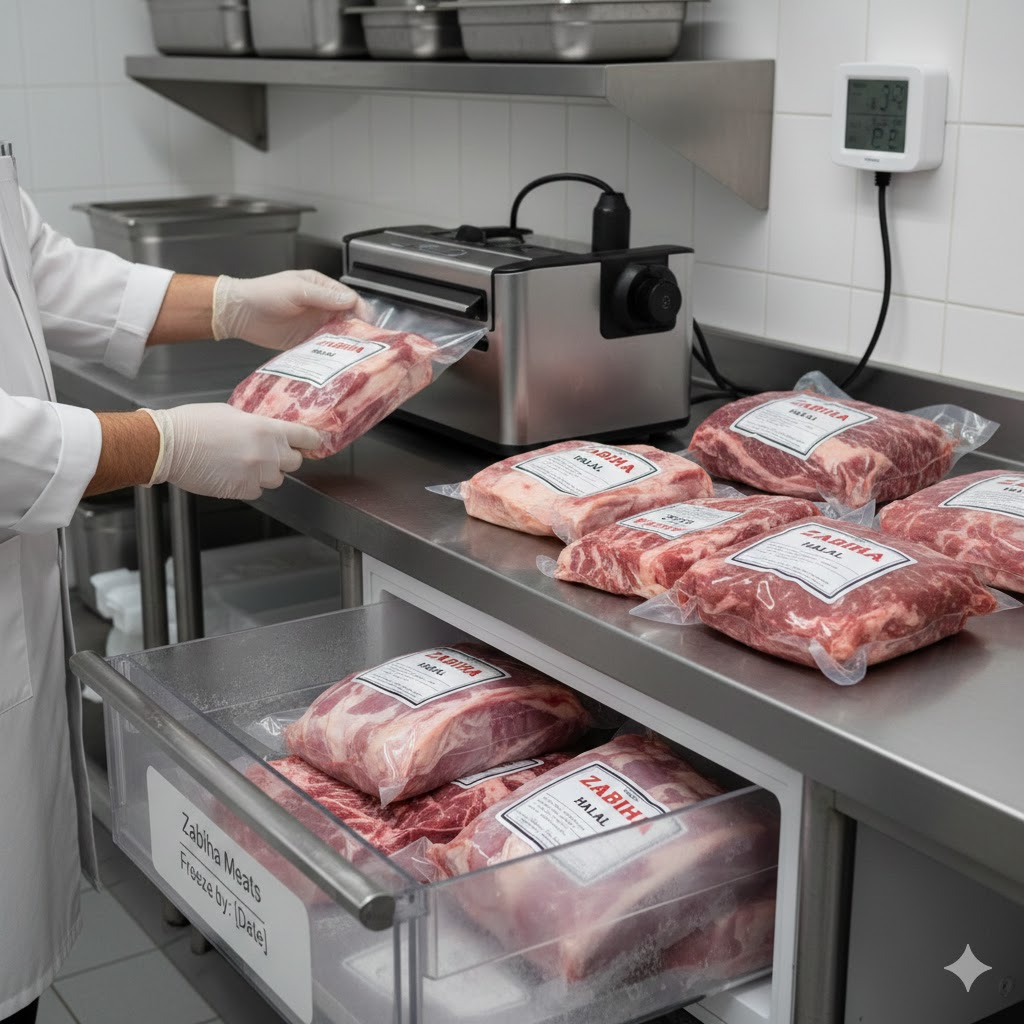
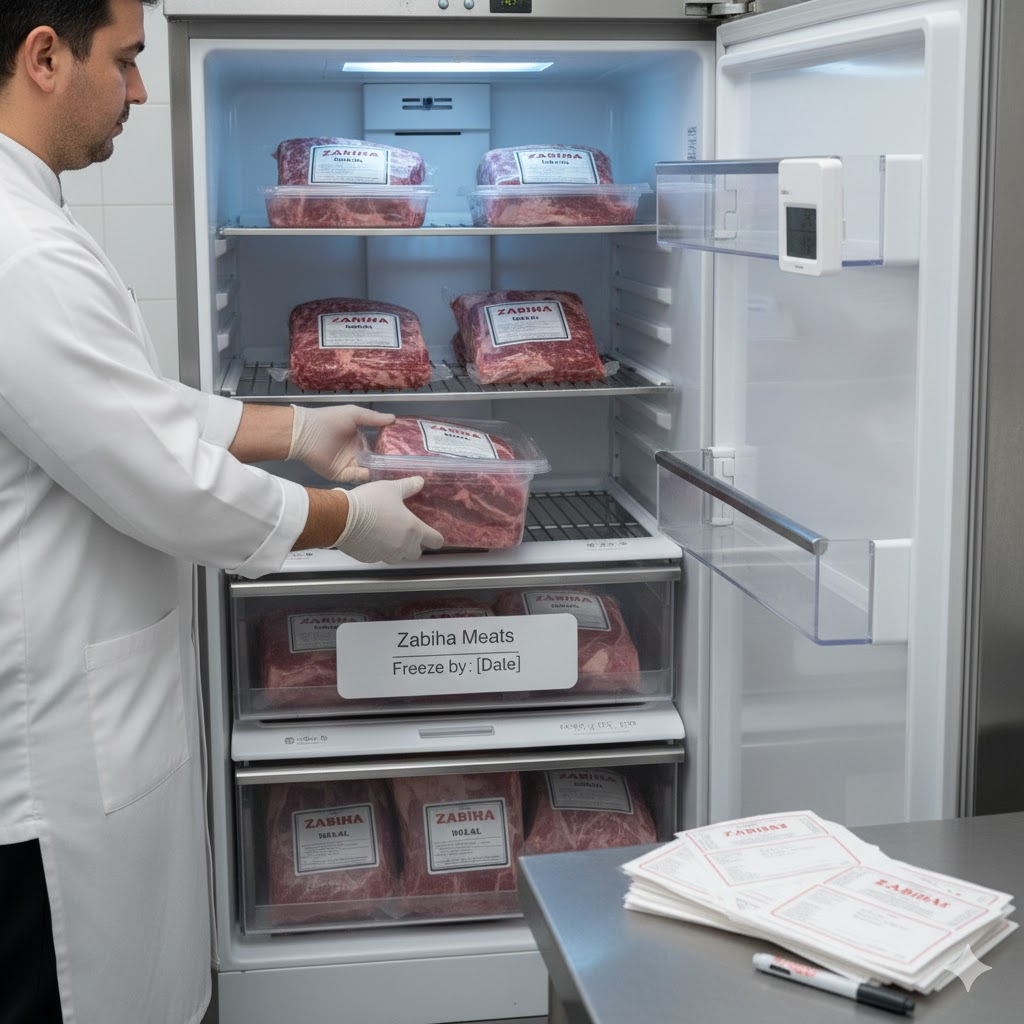
14. Storage Containers
-
Airtight containers help store leftover meat or pre-marinated cuts.
-
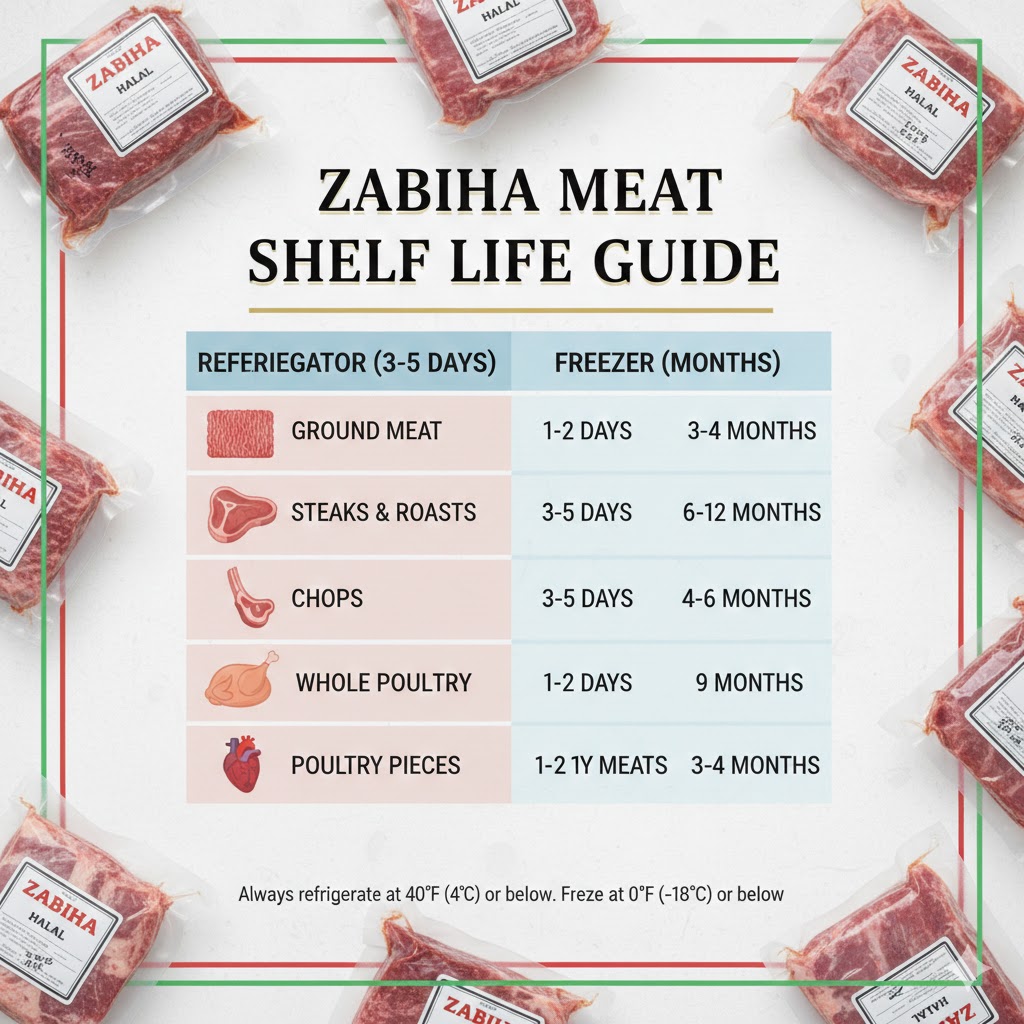
Freeze Zabiha meat safely to preserve flavor and texture.
15. Serving Trays and Plates
-
Presentation matters, especially during festive occasions.
-
Use platters or decorative trays to serve Zabiha meat attractively.
16. Tongs and Spatulas
-
For handling meat during cooking without piercing it.
-
Prevents juices from escaping, keeping meat moist.
Tips for Using Tools Effectively
-
Keep Knives Sharp: Dull knives crush fibers and make cutting harder.
-
Sanitize Surfaces: Wash cutting boards, knives, and bowls thoroughly to prevent contamination.
-
Portion Before Cooking: Cut meat into uniform sizes for even cooking.
-
Use Correct Tools for the Task: A cleaver for bones, a boning knife for trimming, and a mallet for tenderizing.
-
Store Tools Properly: Clean, dry, and store knives and other tools to maintain longevity and hygiene.
Conclusion
Cooking Zabiha meat is both a spiritual and culinary practice, and having the right tools makes all the difference. From knives and cutting boards to pressure cookers, grills, and serving trays, each tool plays a vital role in ensuring your meat is safe, tender, and flavorful. Proper equipment not only simplifies preparation but also enhances the taste, texture, and presentation of your dishes.
Whether preparing daily meals or special dishes for Eid al-Adha and other celebrations, equipping your kitchen with these must-have tools ensures that your Zabiha meat recipes are both delicious and professionally executed.