Knife Skills for Preparing Zabiha Meat

Preparing Zabiha meat is not just about following Islamic guidelines; it also involves culinary precision to ensure the meat is safe, tender, and flavorful. Whether you are cooking for daily meals or festive occasions like Eid al-Adha, mastering knife skills is essential. Proper cutting, portioning, and handling techniques improve cooking results, enhance presentation, and preserve the quality of the meat. This guide offers practical tips and techniques for handling Zabiha meat like a pro.
Understanding Zabiha Meat
Zabiha meat comes from animals slaughtered according to Islamic law. Key requirements include:
-
The animal must be alive and healthy at the time of slaughter.
-
A trained Muslim performs the slaughter using a sharp knife to cut the throat, windpipe, and major blood vessels.
-
Blood is fully drained from the carcass.
-
The name of Allah (Bismillah) is recited during slaughter.
Once the meat is prepared according to Zabiha guidelines, proper handling and cutting techniques are crucial to maintaining its quality and flavor.
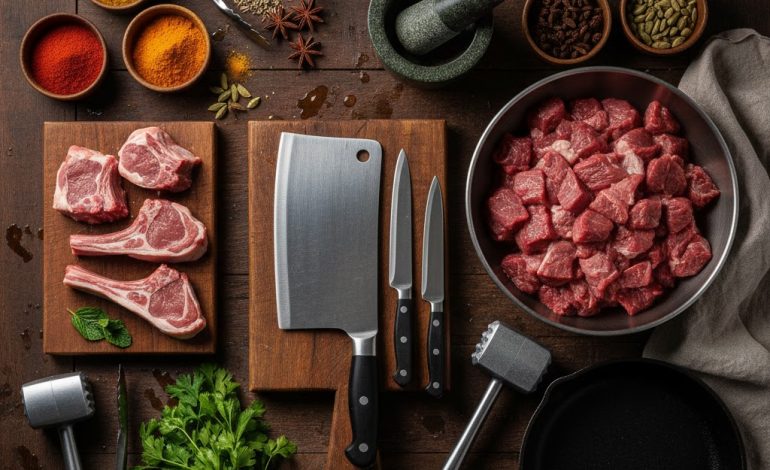
Essential Tools for Cutting Zabiha Meat
Before you start, ensure you have the right tools:
-
Sharp Chef’s Knife: A versatile knife suitable for most cuts.
-
Boning Knife: Ideal for separating meat from bones and trimming fat.
-
Cleaver: Perfect for chopping through bones and tough joints.
-
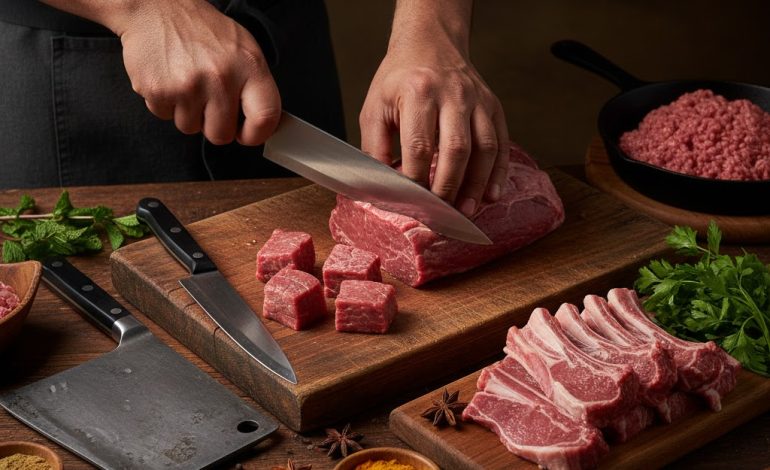
Cutting Board: Use a sturdy, non-slip surface; separate boards for meat and vegetables to prevent cross-contamination.
-
Kitchen Shears: Helpful for trimming smaller bones, cartilage, and fat.
A sharp knife is critical—dull knives crush fibers and make meat harder to cut cleanly.
Basic Knife Techniques
Mastering basic knife skills is essential for consistent and efficient preparation:
1. Slicing Against the Grain
-
Identify the direction of the meat fibers.
-
Cut perpendicular to the grain to shorten fibers and make meat easier to chew.
-
This technique is particularly important for tougher cuts like goat, lamb shoulder, or beef chuck.
2. Portioning Meat
-
Decide on portion sizes based on the dish:
-
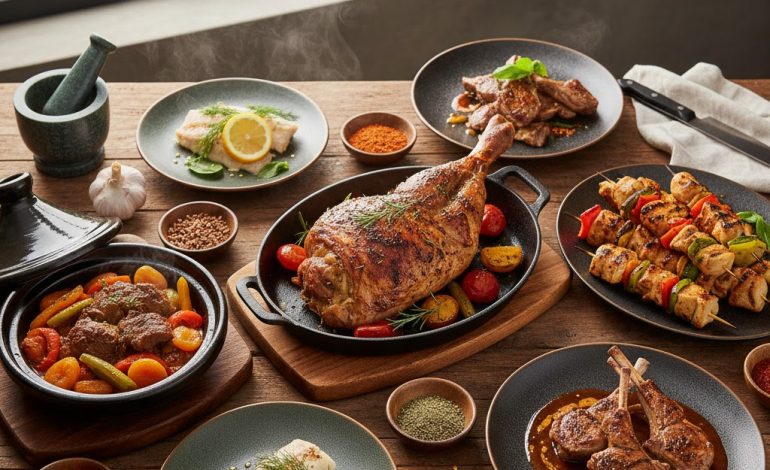
Stews and Curries: Use bite-sized cubes or bone-in pieces.
-
Roasting: Larger cuts like leg or shoulder are ideal.
-
Grilling/Kebabs: Uniform slices or cubes ensure even cooking.
-
-
Consistent portioning ensures uniform cooking and presentation.
3. Deboning
-
Use a boning knife to carefully remove bones while leaving as much meat intact as possible.
-
Work slowly to avoid cutting into the meat unnecessarily.
-
Save bones for soups or broths for extra flavor.
4. Trimming Fat and Connective Tissue
-
Remove excessive fat, sinew, and connective tissue for leaner, more tender meat.
-
Some fat can remain to enhance flavor, especially for slow-cooked or roasted dishes.
5. Scoring
-
Shallow cuts on the surface of tougher meat or lamb chops allow marinades to penetrate deeper.
-
Helps in faster and more even cooking while tenderizing the meat.
Handling Zabiha Meat Safely
Safety is as important as technique:
-
Clean Surfaces: Wash hands, knives, and boards before and after handling meat.
-
Separate Cutting Boards: Prevent cross-contamination by using different boards for meat and vegetables.
-
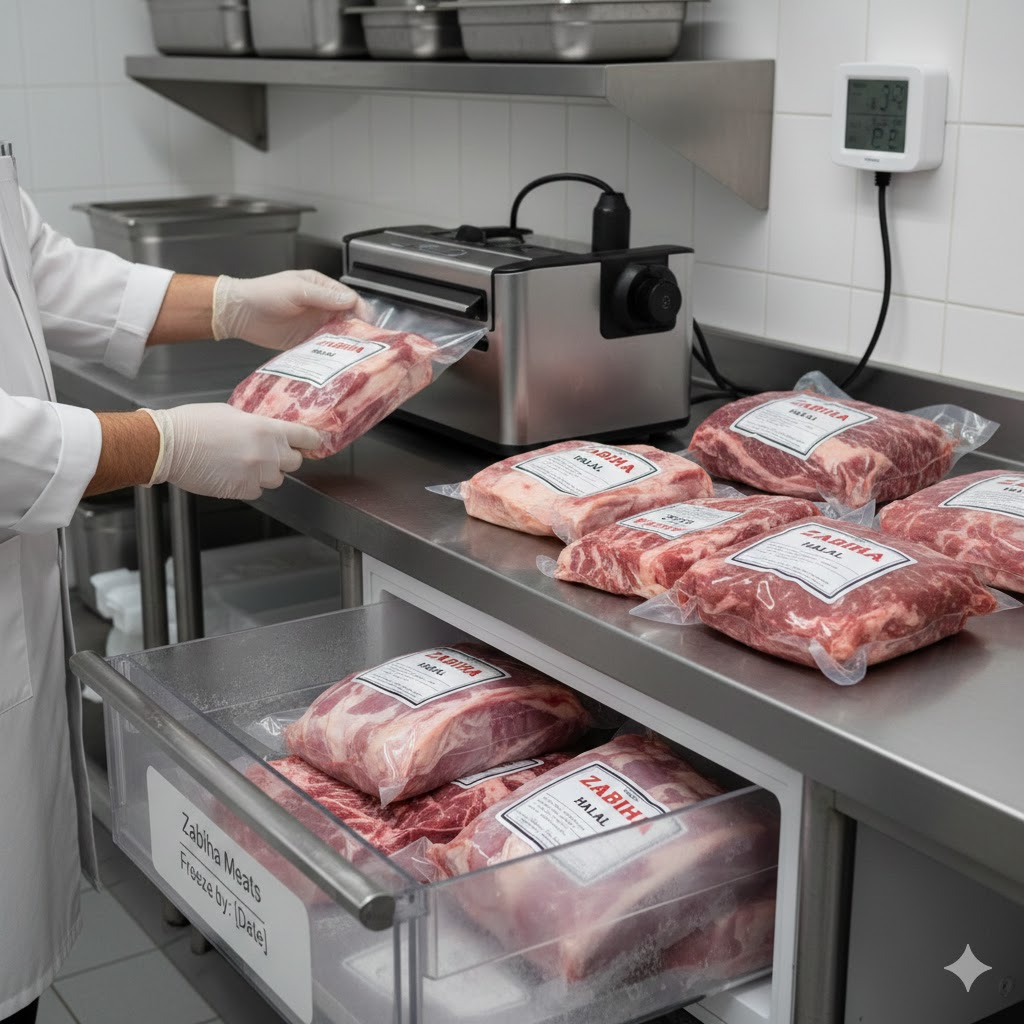
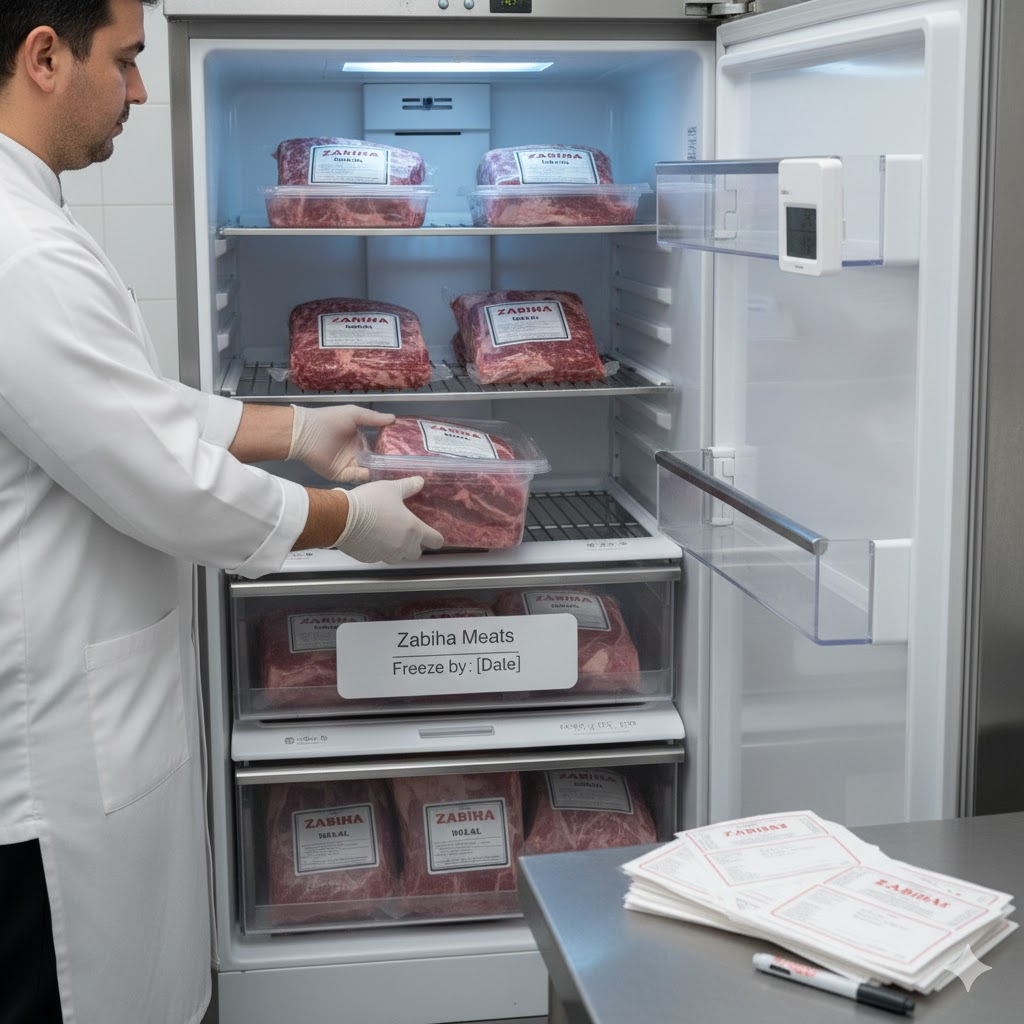
Proper Storage: Keep meat chilled until ready to cut and cook.
-
Hygiene: Sanitize tools and surfaces to prevent bacterial growth.
Safe handling ensures that Zabiha meat remains wholesome and suitable for consumption.
Cooking Considerations After Cutting
How you cut Zabiha meat influences cooking outcomes:
-
Uniform Pieces: Ensure even cooking and prevent overcooked or undercooked sections.
-
Bone-In vs. Boneless: Bones add flavor and retain moisture; boneless cuts cook faster and are easier to portion.
-
Marination: Properly cut pieces allow marinades to coat the meat thoroughly, enhancing flavor and tenderness.
By paying attention to how meat is cut and prepared, you can achieve better texture, taste, and visual appeal in your dishes.
Common Mistakes to Avoid
-
Using Dull Knives: Leads to uneven cuts and damaged fibers.
-
Ignoring Grain Direction: Results in tougher meat.
-
Overcrowding the Cutting Board: Makes precise cutting difficult.
-
Cutting Cold Frozen Meat: Can cause knife slippage or damage; thaw slightly before cutting.
-
Discarding Useful Parts: Bones and trimmed fat can be used for broths or slow-cooked dishes.
Avoiding these mistakes ensures efficiency, safety, and quality.
Conclusion
Knife skills are an essential part of preparing Zabiha meat. Proper slicing, portioning, deboning, and trimming techniques not only improve the texture and flavor of meat but also enhance presentation and cooking efficiency. By combining safe handling practices with attention to detail, first-time cooks and experienced chefs alike can transform Zabiha meat into tender, flavorful, and visually appealing dishes.
Whether preparing daily meals, traditional curries, or festive dishes for Eid al-Adha, mastering these knife skills ensures that every cut of Zabiha meat reaches its full culinary potential.