Common Questions About Zabiha Meat Answered

Zabiha meat is an essential part of Islamic dietary practices, but for many people—especially those new to cooking or consuming halal meat—there are numerous questions about its preparation, authenticity, and usage. From understanding what Zabiha meat truly is to learning how to cook it safely and deliciously, this guide answers the most common questions to help you navigate Zabiha meat with confidence.
1. What is Zabiha Meat?
Zabiha meat refers to meat from animals slaughtered according to Islamic law. The slaughtering process ensures the meat is halal (permissible) and includes:
-
The animal must be alive and healthy at the time of slaughter.
-
A trained Muslim uses a sharp knife to make a swift cut to the throat, windpipe, and major blood vessels.
-
Blood is fully drained from the animal.
-
The name of Allah (Bismillah) is recited during the process.
Zabiha meat emphasizes humane treatment, spiritual compliance, and ethical sourcing, making it distinct from regular meat.
2. How Is Zabiha Meat Different from Regular Halal Meat?
While all Zabiha meat is halal, not all halal meat qualifies as Zabiha. The key differences are:
-
Slaughtering Method: Zabiha requires a direct cut to the throat performed by a trained Muslim, while halal meat may be certified through other processes.
-
Blood Drainage: Zabiha mandates complete removal of blood.
-
Spiritual Compliance: Zabiha emphasizes reciting Allah’s name at the moment of slaughter.
In essence, Zabiha meat follows stricter religious guidelines to ensure full compliance with Islamic law.
3. What Types of Animals Are Used for Zabiha Meat?
Common animals used include:
-
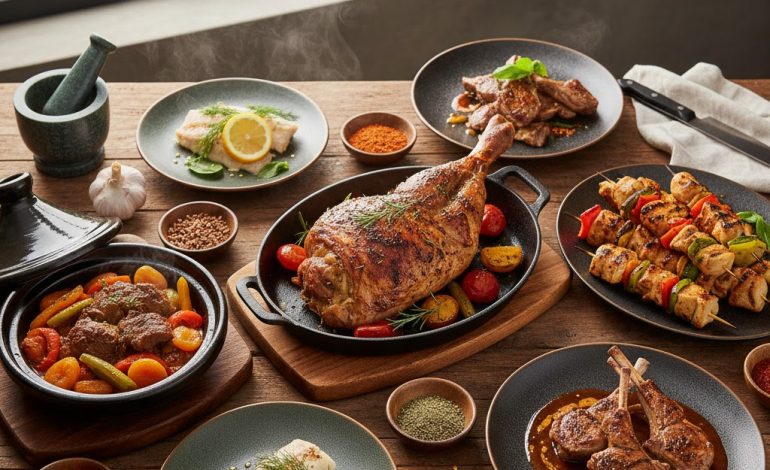
Goats and Sheep: Popular for daily meals and festival sacrifices like Eid al-Adha.
-
Lamb: Widely used for stews, grilled dishes, and ceremonial feasts.
-
Beef and Cattle: Often used for large gatherings and special occasions.
-
Chicken: Frequently used for everyday meals due to affordability and convenience.
-
Camel: Used in some Middle Eastern communities for festivals or large celebrations.
Each type of meat has unique textures and flavors, influencing cooking methods.
4. How Do I Know if Zabiha Meat Is Authentic?
Authenticity is crucial, especially in regions where halal certification is inconsistent. Look for:
-
Certification: Verified Zabiha certification from trusted halal authorities. Examples include IFANCA (USA), HMA (UK), and EHC (Europe).
-
Trusted Suppliers: Purchase from reputable butcher shops, supermarkets, or online platforms specializing in Zabiha meat.
-
Labeling: Check for clear labeling mentioning “Zabiha” or “Islamically Slaughtered.”
-
Visual and Smell Checks: Fresh Zabiha meat should have a bright color, firm texture, and neutral odor.
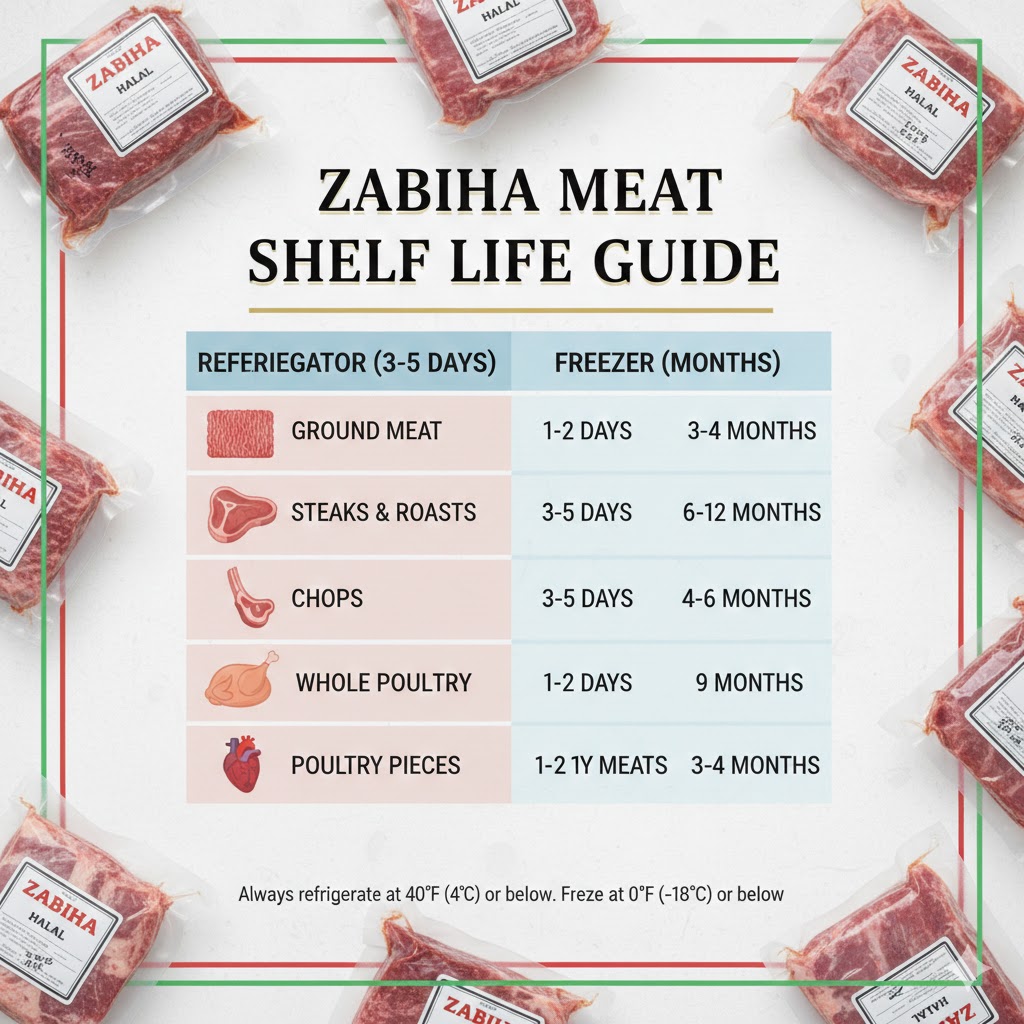
5. How Should I Store Zabiha Meat?
Proper storage ensures freshness and safety:
-
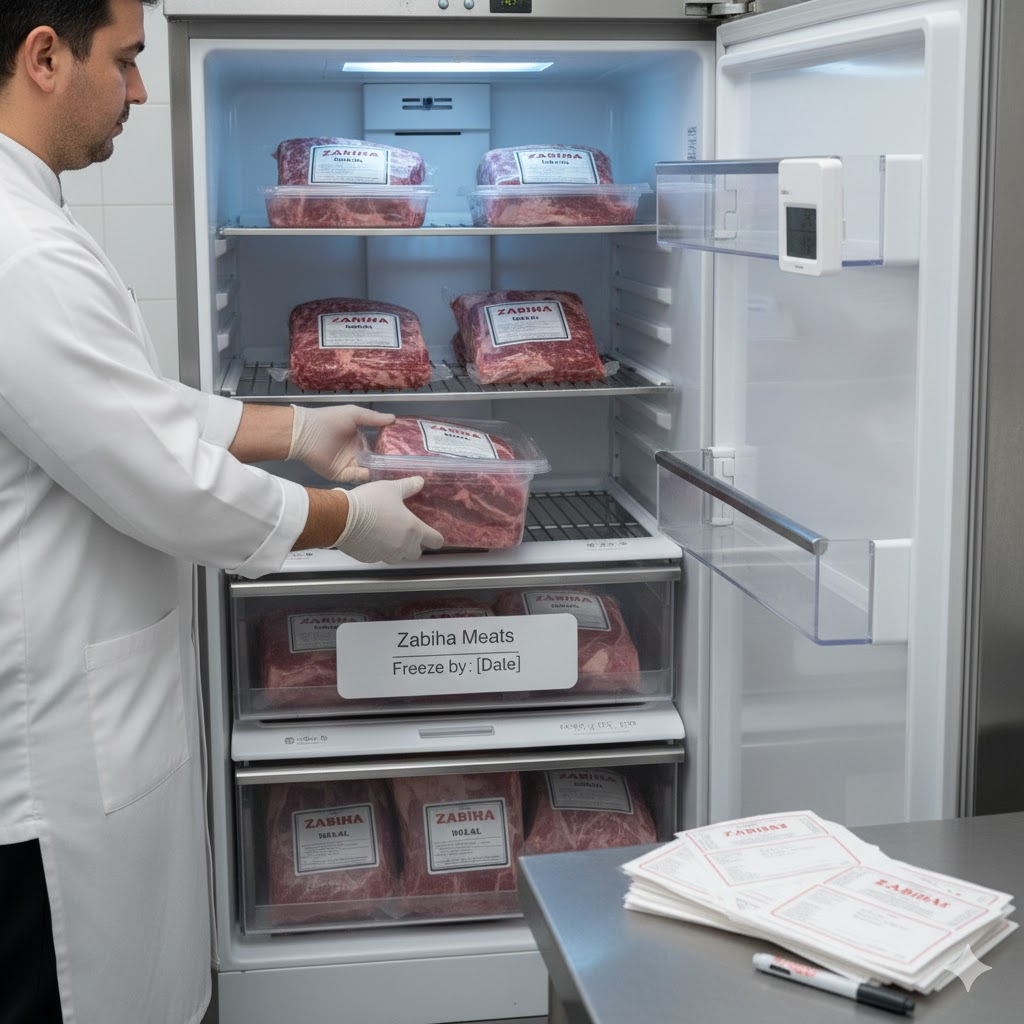
Refrigeration: Keep meat at 1–4°C if using within 1–2 days.
-
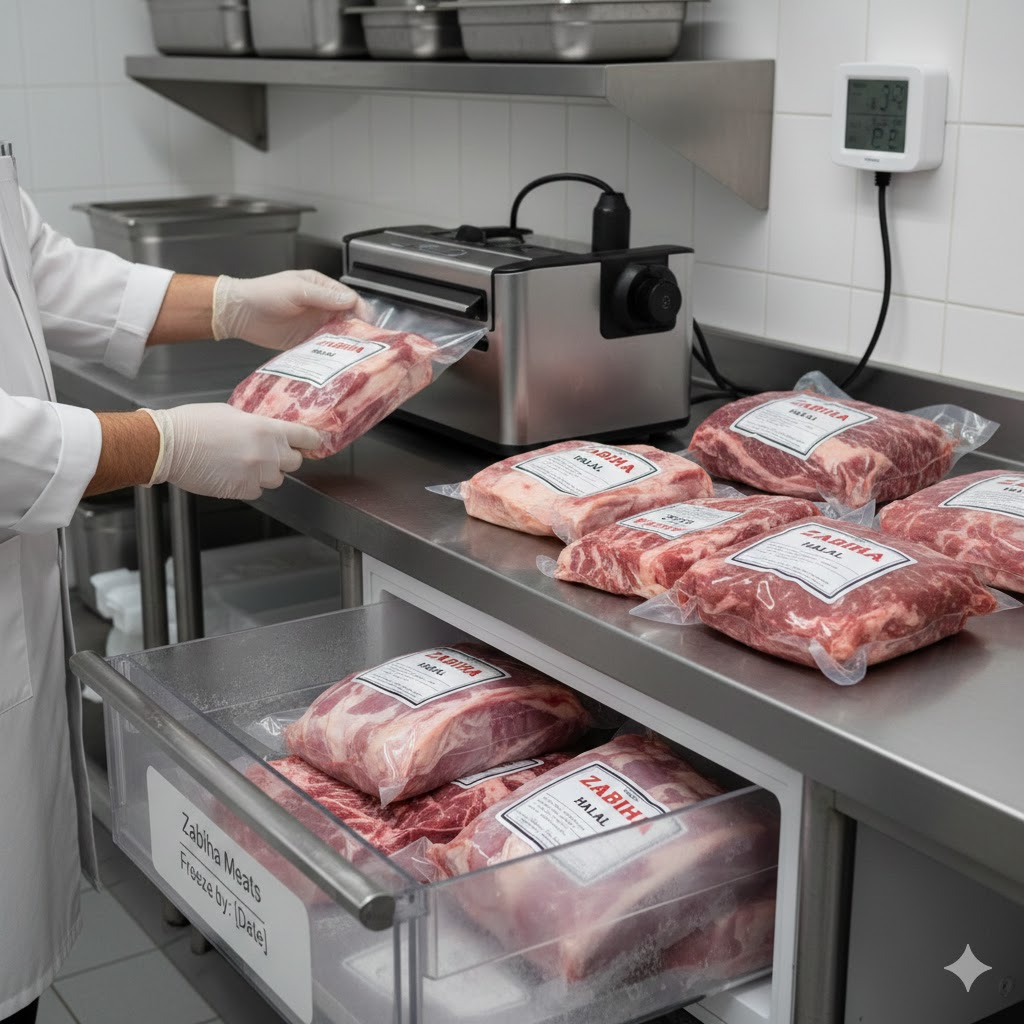
Freezing: Freeze meat at −18°C for longer storage. Use airtight packaging to prevent freezer burn.
-
Thawing: Thaw slowly in the refrigerator or under cold running water; avoid room temperature thawing to reduce bacterial growth.
6. How Do I Cook Zabiha Meat Properly?
Cooking methods depend on the cut and type of meat:
-
Tender Cuts (e.g., lamb chops, chicken breasts): Grill, roast, or sauté quickly over medium heat.
-
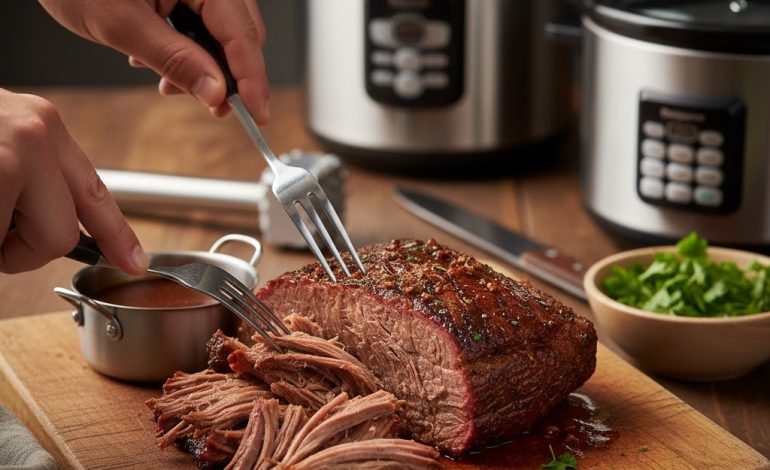
Tough Cuts (e.g., goat leg, beef chuck): Slow cook, braise, or pressure cook for tenderness.
-
Flavor Tips: Marinate meat with yogurt, lemon juice, or spices to enhance flavor and tenderness.
Always slice against the grain for tougher cuts to make meat easier to chew.
7. Can Zabiha Meat Be Used in All Recipes?
Yes. Zabiha meat is versatile and can be used in:
-
Curries and stews
-
Biryani and rice dishes
-
Kebabs and grilled preparations
-
Roasts and casseroles
Its flavor and texture make it suitable for both traditional Islamic dishes and modern international recipes.
8. Is Zabiha Meat More Expensive?
Zabiha meat can be slightly more expensive due to:
-
Strict slaughtering requirements
-
Certified handling and processing
-
Supply chain management, especially for imported meat
However, many consider the cost worthwhile for spiritual compliance, ethical sourcing, and quality assurance.
9. Can Zabiha Meat Be Shared or Donated?
Yes. Sharing Zabiha meat is encouraged, especially during festivals like Eid al-Adha:
-
Divide meat into portions for family, friends, and the needy.
-
Donating Zabiha meat fosters community bonds and fulfills charitable obligations.
10. How Do I Make Tough Zabiha Meat Tender?
If you have a tougher cut:
-
Slow Cook or Braise: Breaks down collagen for tender results.
-
Marinate with Acidic Ingredients: Yogurt, lemon juice, or vinegar helps tenderize fibers.
-
Use a Pressure Cooker: Reduces cooking time while ensuring tenderness.
-
Shred Meat: Works well for stews, sandwiches, and biryani.
Conclusion
Zabiha meat is more than a dietary choice—it is a spiritual and ethical practice embedded in Islamic tradition. By understanding its preparation, storage, cooking, and authenticity, you can enjoy flavorful, tender, and halal-compliant meals. From daily curries and grilled dishes to festive celebrations like Eid al-Adha, Zabiha meat ensures both culinary satisfaction and religious observance.
With careful selection, proper handling, and cooking techniques, first-time consumers and experienced cooks alike can confidently prepare Zabiha meat while honoring centuries-old traditions.