Freezing Zabiha Meat Safely

Zabiha meat is a central component of halal diets and festive occasions like Eid al-Adha. To preserve its freshness, flavor, and nutritional value, freezing is often the most practical solution—especially when you buy in bulk. However, freezing meat improperly can lead to freezer burn, loss of texture, and even food safety risks. Understanding how to freeze Zabiha meat safely ensures that it remains tender, flavorful, and ready to cook whenever you need it.
Why Freezing Zabiha Meat Matters
Freezing slows down the growth of bacteria and other microorganisms that cause spoilage. When done correctly, it allows:
-
Longer Shelf Life: Meat can be stored for months without losing quality.
-
Convenience: Prepare large portions in advance for cooking or special occasions.
-
Preservation of Flavor: Properly frozen meat retains its natural aroma and taste.
-
Reduced Waste: Avoids spoilage and unnecessary discarding of meat.
Even though Zabiha meat is carefully prepared following Islamic guidelines, how you store it afterward determines its safety and culinary quality.
Preparing Zabiha Meat for Freezing
Before freezing, preparation is key to maintaining quality:
1. Portioning
-
Divide large cuts into meal-sized portions for easier thawing and cooking.
-
Smaller portions freeze and thaw faster, ensuring even cooking later.
2. Trimming
-
Remove excess fat and connective tissue to reduce spoilage.
-
Leaving a small amount of fat is beneficial, as it helps retain moisture and flavor.
3. Packaging
-
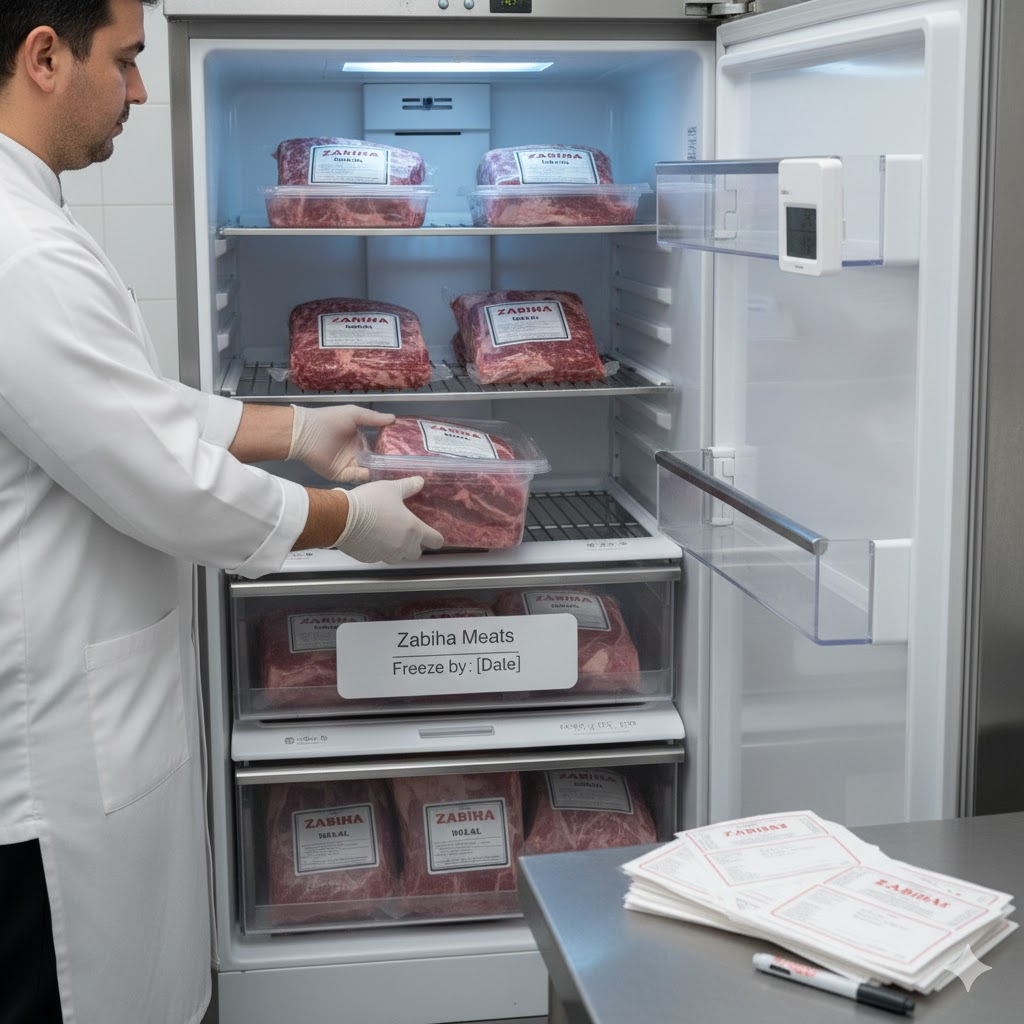
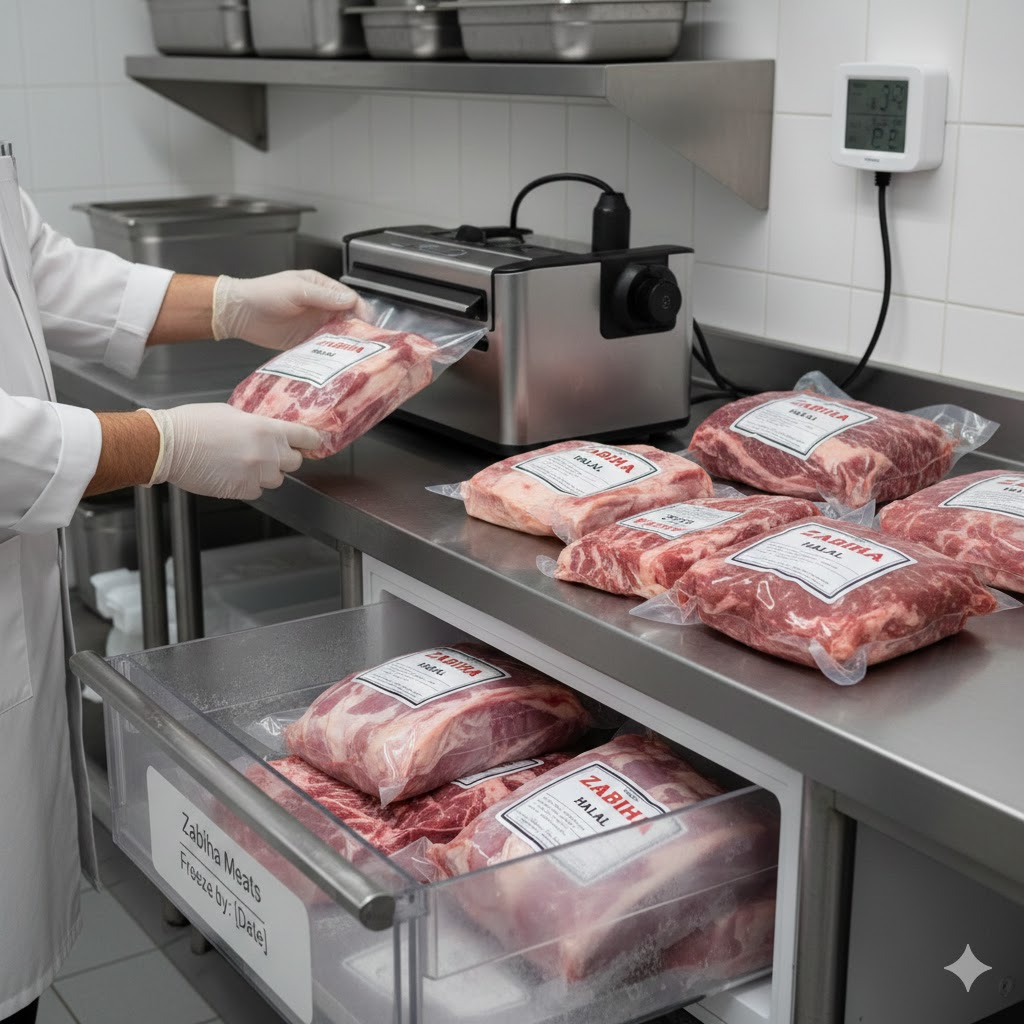
Use airtight freezer bags, vacuum-sealed packs, or tightly wrapped foil/plastic wrap.
-
Remove as much air as possible to prevent freezer burn.
-
Label each package with the type of meat, cut, and date of freezing for easy tracking.
4. Optional Marination
-
You can marinate tougher cuts in yogurt, lemon juice, or spices before freezing.
-
This helps tenderize meat and infuse flavor while stored.
Freezing Guidelines for Different Zabiha Meats
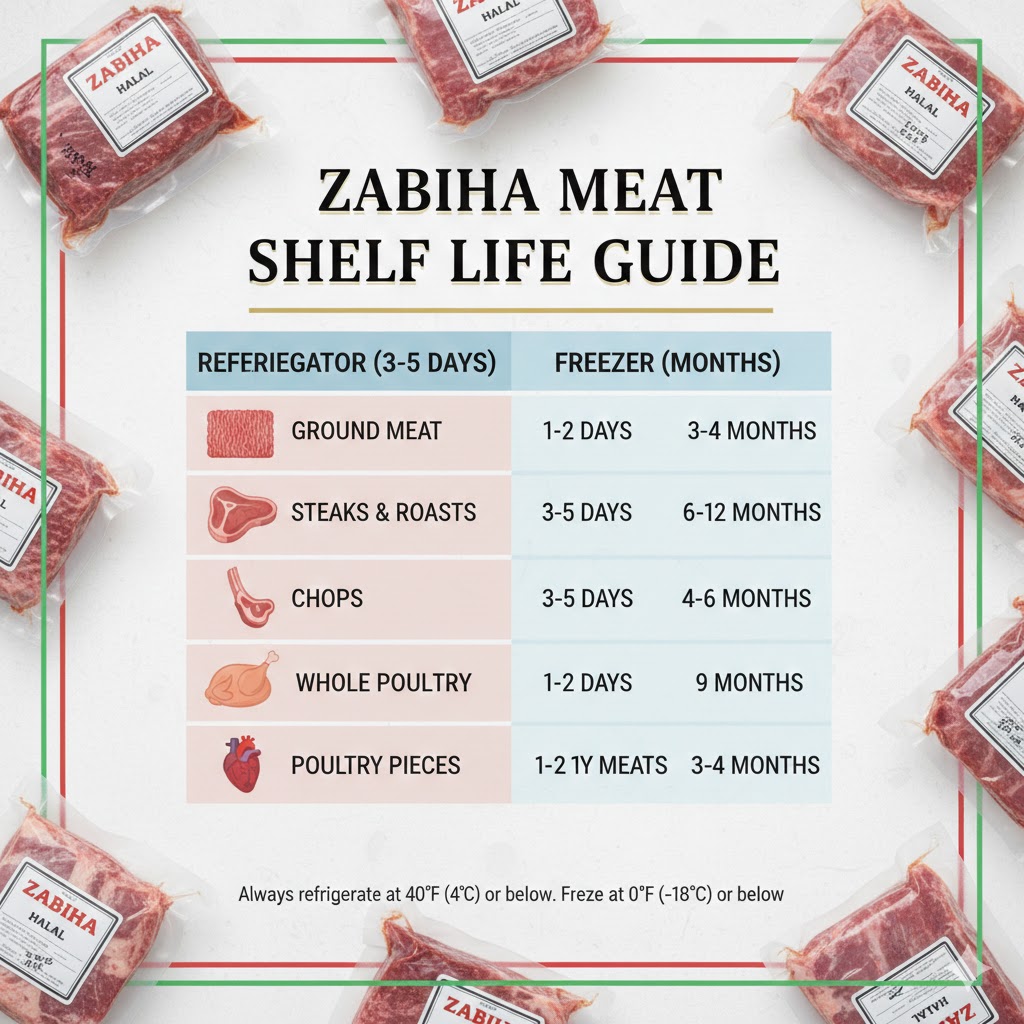
The freezing duration varies by meat type and cut:
1. Chicken
-
Whole Chicken: Up to 12 months
-
Chicken Parts (breasts, thighs, wings): 9 months
-
Ground Chicken: 3–4 months
2. Lamb
-
Bone-In Cuts: 6–9 months
-
Boneless Cuts: 4–6 months
-
Ground Lamb: 3–4 months
3. Goat
-
Bone-In Cuts: 6–8 months
-
Boneless Cuts: 4–6 months
-
Ground Goat: 3–4 months
4. Beef
-
Steaks or Roasts: 6–12 months
-
Ground Beef: 3–4 months
5. Camel
-
Bone-In Cuts: 6–8 months
-
Boneless Cuts: 4–6 months
Tip: Freeze meat as fresh as possible to maximize shelf life and quality.
Best Practices for Freezing
-
Freeze Quickly: The faster meat freezes, the smaller the ice crystals, which reduces damage to meat fibers.
-
Keep a Constant Temperature: Ensure the freezer stays at −18°C (0°F) or below.
-
Avoid Overloading the Freezer: Adequate airflow ensures consistent freezing for all packages.
-
Separate Types of Meat: Store different types of meat separately to avoid cross-flavor contamination.
-
Use Proper Containers: Avoid thin bags that can tear; opt for freezer-safe packaging.
Thawing Frozen Zabiha Meat
How you thaw meat impacts both safety and texture:
-
Refrigerator Thawing (Recommended): Place meat in the fridge for 12–48 hours depending on size. Keeps meat at a safe temperature.
-
Cold Water Thawing: Submerge meat in a sealed bag in cold water, changing water every 30 minutes. Cook immediately afterward.
-
Microwave Thawing: Use the defrost function and cook immediately, as some parts may begin to cook during thawing.
Avoid thawing at room temperature, as this encourages bacterial growth and can compromise meat quality.
Signs of Freezer Burn
Even frozen meat can deteriorate if stored improperly:
-
Discoloration: Gray or brown patches indicate ice crystal damage.
-
Dry Texture: Meat may feel leathery or brittle.
-
Off Smell: A strong, unusual odor after thawing is a warning sign.
Freezer burn doesn’t make meat unsafe, but it affects taste, texture, and tenderness.
Tips to Preserve Flavor and Nutrition
-
Vacuum Seal: Reduces air exposure, preventing oxidation and flavor loss.
-
Use Fresh Meat: Freeze as soon as possible after purchase or slaughter.
-
Marinate Before Freezing: Helps retain moisture and enhance taste.
-
Avoid Refreezing: Thaw only what you plan to cook to maintain quality.
Conclusion
Freezing Zabiha meat safely is a practical way to store this essential halal food without compromising safety, flavor, or nutritional value. By following proper portioning, packaging, freezing, and thawing methods, you can extend the shelf life of chicken, lamb, goat, beef, and camel meat while maintaining its tender texture and rich taste.
Whether for daily meals or festive occasions, proper freezing ensures that Zabiha meat is ready to cook, delicious, and safe for consumption. With attention to detail and consistent best practices, you can enjoy the full quality of Zabiha meat whenever you need it.