Shelf Life of Different Zabiha Meats

Zabiha meat, prepared according to Islamic guidelines, is a staple for Muslim households worldwide. Whether purchased for everyday cooking or festive occasions like Eid al-Adha, understanding the shelf life of different Zabiha meats is essential for safety, flavor, and nutrition. Proper storage ensures your meat remains fresh, tender, and suitable for consumption, while minimizing waste. This guide breaks down the shelf life of various Zabiha meats and provides tips for storage and handling.
Understanding Zabiha Meat
Zabiha meat is derived from animals slaughtered according to Islamic law. Key points include:
-
The animal must be healthy and alive at the time of slaughter.
-
A trained Muslim performs the slaughter using a sharp knife to cut the throat, windpipe, and major blood vessels.
-
Blood is fully drained, and the name of Allah (Bismillah) is recited.
Once Zabiha meat is prepared, its shelf life depends on the type of meat, cut, and storage method.
Factors Affecting Shelf Life
Several factors influence how long Zabiha meat stays fresh:
-
Type of Meat: Chicken, lamb, beef, and goat have different fat content, water content, and textures, affecting how quickly they spoil.
-
Cut and Bone Content: Bone-in meat can last slightly longer due to reduced surface exposure, while ground meat has a shorter shelf life.
-
Storage Temperature: Cold temperatures slow bacterial growth, while room temperature accelerates spoilage.
-
Packaging: Vacuum-sealed or airtight packaging preserves freshness longer than loose storage.
-
Handling: Hygiene during slaughtering, cutting, and storage affects meat longevity.
Shelf Life of Different Zabiha Meats
1. Chicken
-
Refrigerated (1–4°C): 1–2 days for raw chicken; cooked chicken lasts 3–4 days.
-
Frozen (−18°C): Whole chicken can last 12 months; cuts like breasts or thighs last 9 months.
-
Tips: Store in airtight containers or vacuum-sealed bags to prevent freezer burn.
2. Lamb
-
Refrigerated (1–4°C): 3–5 days for raw lamb; cooked lamb lasts 3–4 days.
-
Frozen (−18°C): Bone-in cuts last 6–9 months; boneless cuts last 4–6 months.
-
Tips: Wrap meat tightly in foil or freezer paper to prevent exposure to air.
3. Goat
-
Refrigerated (1–4°C): 3–4 days for raw meat; cooked goat lasts 3 days.
-
Frozen (−18°C): Whole or bone-in cuts last 6–8 months; boneless cuts last 4–6 months.
-
Tips: Smaller cuts thaw faster and cook more evenly.
4. Beef
-
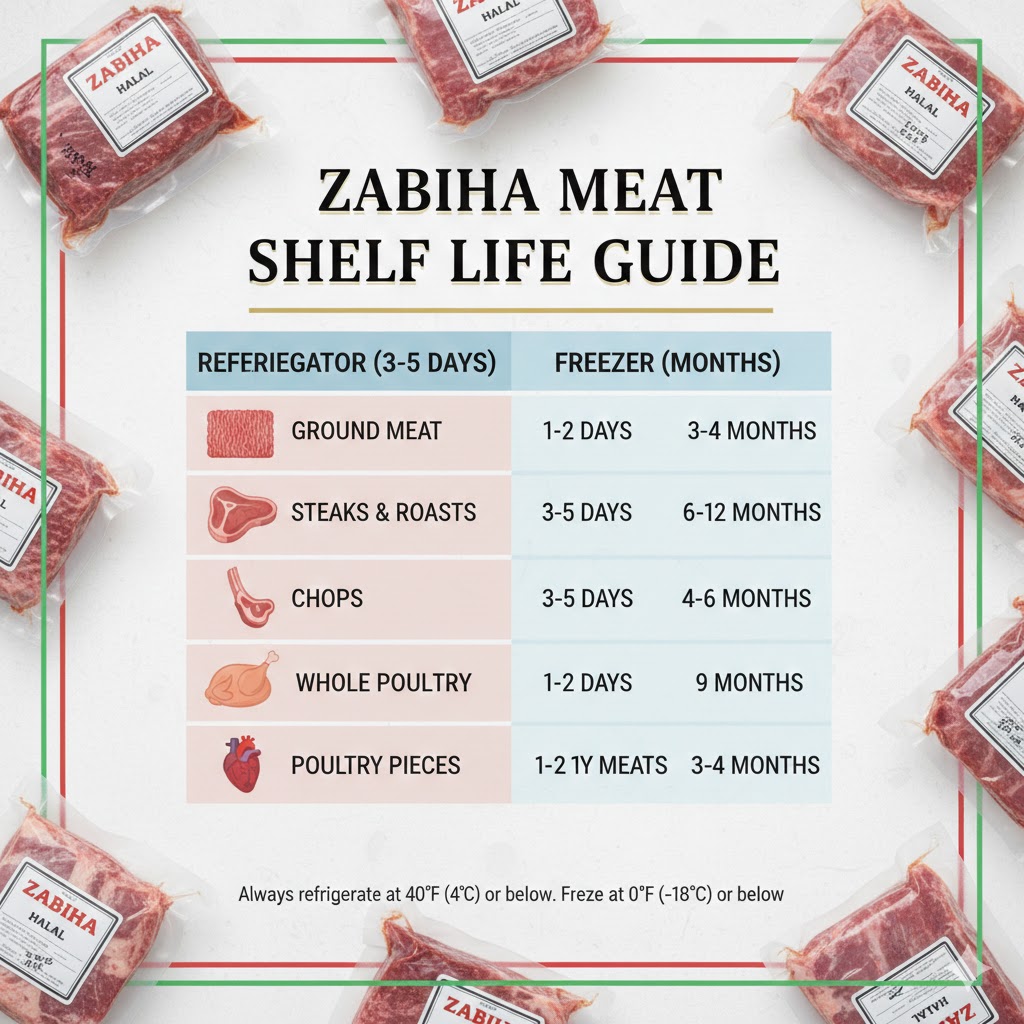
Refrigerated (1–4°C): 3–5 days for raw beef; cooked beef lasts 3–4 days.
-
Frozen (−18°C): Steaks or roasts last 6–12 months; ground beef lasts 3–4 months.
-
Tips: Avoid thawing at room temperature; use refrigerator or cold water methods.
5. Camel
-
Refrigerated (1–4°C): 2–3 days for raw camel meat; cooked meat lasts 3–4 days.
-
Frozen (−18°C): Bone-in or whole cuts last 6–8 months.
-
Tips: Camel meat is leaner than beef; ensure proper marination or slow cooking for tenderness.
Best Practices for Storing Zabiha Meat
-
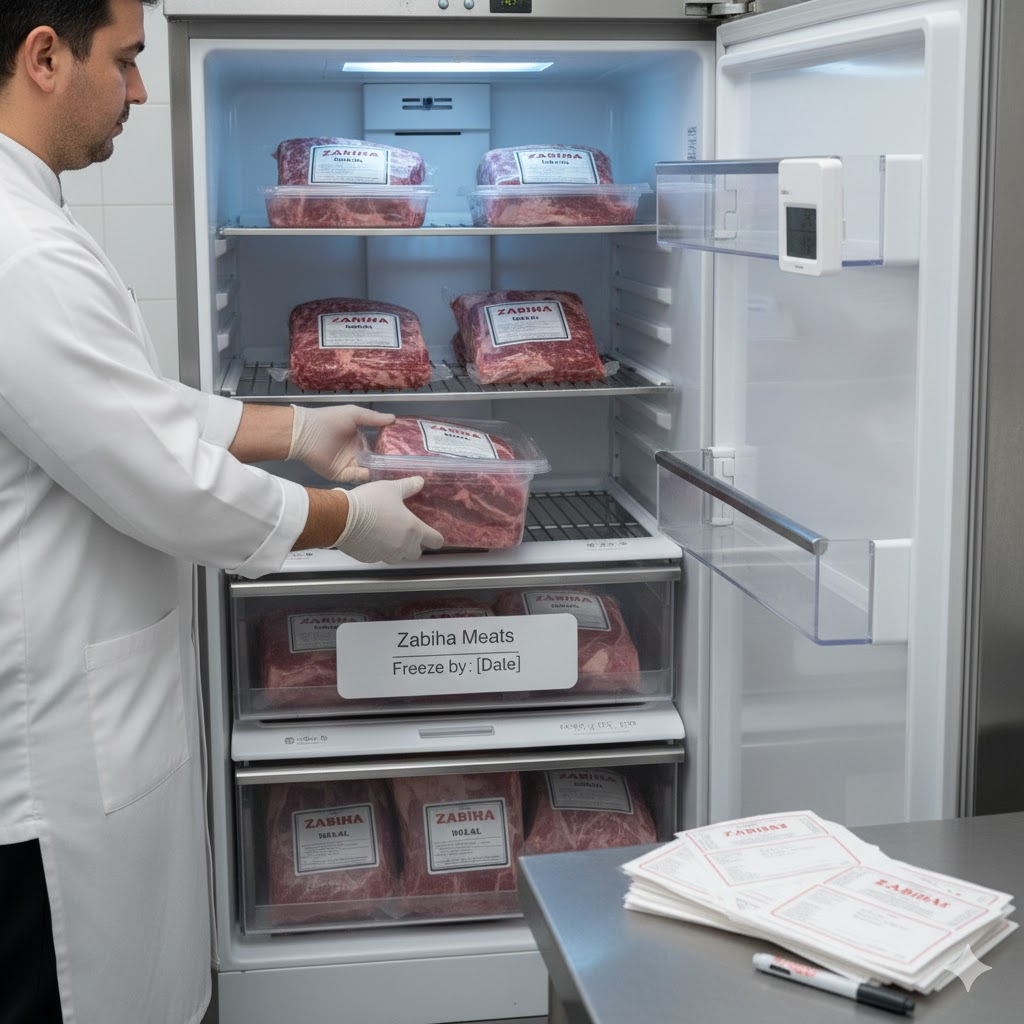
Refrigeration: Keep raw meat at 1–4°C. Store on the lowest shelf to avoid dripping onto other foods.
-
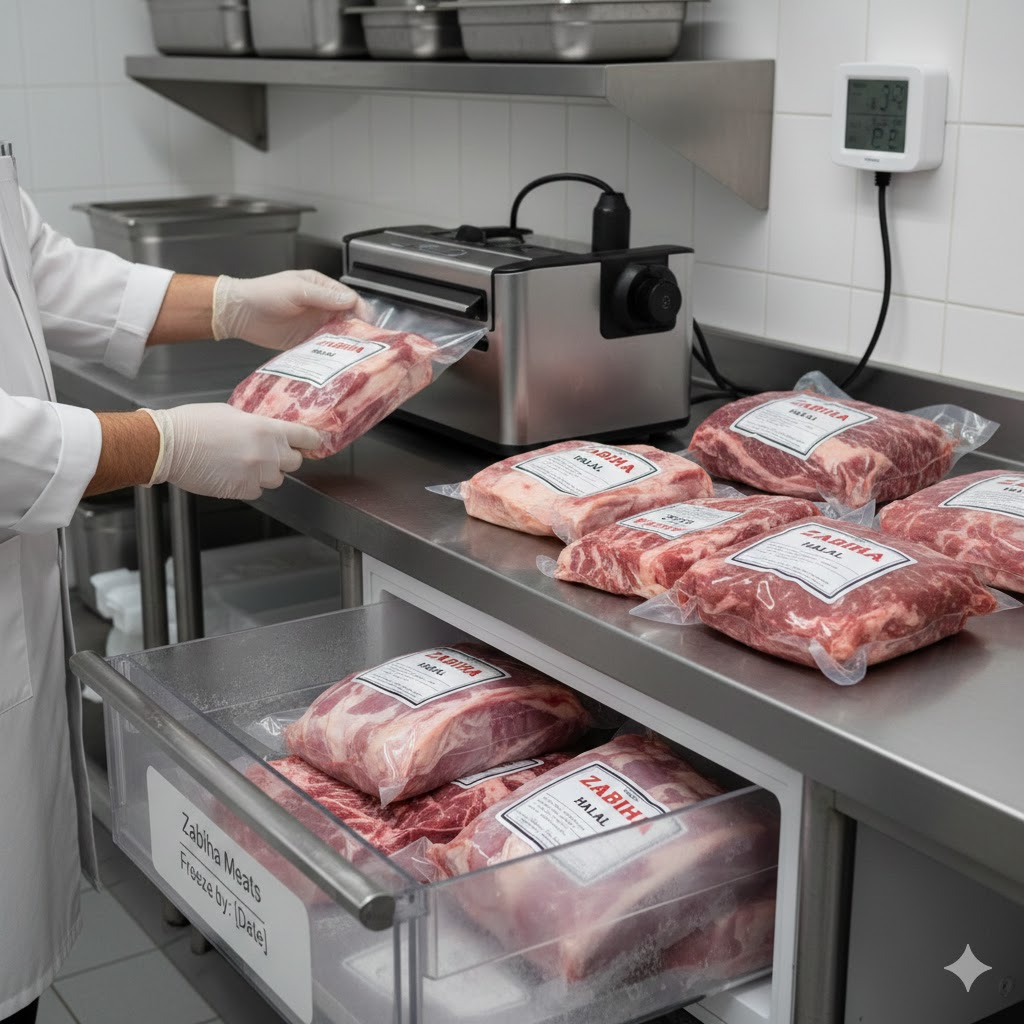
Freezing: Freeze meat promptly if not used within a couple of days. Use airtight packaging to prevent freezer burn.
-
Portioning: Divide meat into meal-sized portions before freezing to avoid repeatedly thawing and refreezing.
-
Labeling: Clearly label packages with the type of meat and date of freezing for easy tracking.
-
Thawing Safely: Thaw in the refrigerator, cold water, or microwave. Never thaw at room temperature.
Signs Zabiha Meat Has Spoiled
Even when stored properly, it’s important to recognize signs of spoilage:
-
Odor: Sour, ammonia-like, or off smells indicate bacteria growth.
-
Texture: Slimy or sticky surface is a warning sign.
-
Color: Dull or grayish meat may be past its prime.
-
Excess Moisture: Pooling liquid in packaging can accelerate spoilage.
If any of these signs are present, it’s safer to discard the meat.
Extending Shelf Life Naturally
-
Marination: Acidic marinades (yogurt, lemon, or vinegar) can slightly extend freshness.
-
Vacuum Sealing: Reduces air exposure and prevents freezer burn.
-
Proper Hygiene: Wash hands, tools, and surfaces before handling meat.
Conclusion
The shelf life of Zabiha meat varies depending on the type, cut, and storage method. Chicken, lamb, goat, beef, and camel each have specific guidelines for refrigeration and freezing, which, if followed, preserve both safety and flavor. Proper storage, safe thawing, and attention to spoilage signs are key to enjoying tender, flavorful, and hygienic Zabiha meat.
By understanding the shelf life of different Zabiha meats and following best practices, you can ensure your meals are delicious, nutritious, and safe, whether for everyday cooking or special festive occasions.