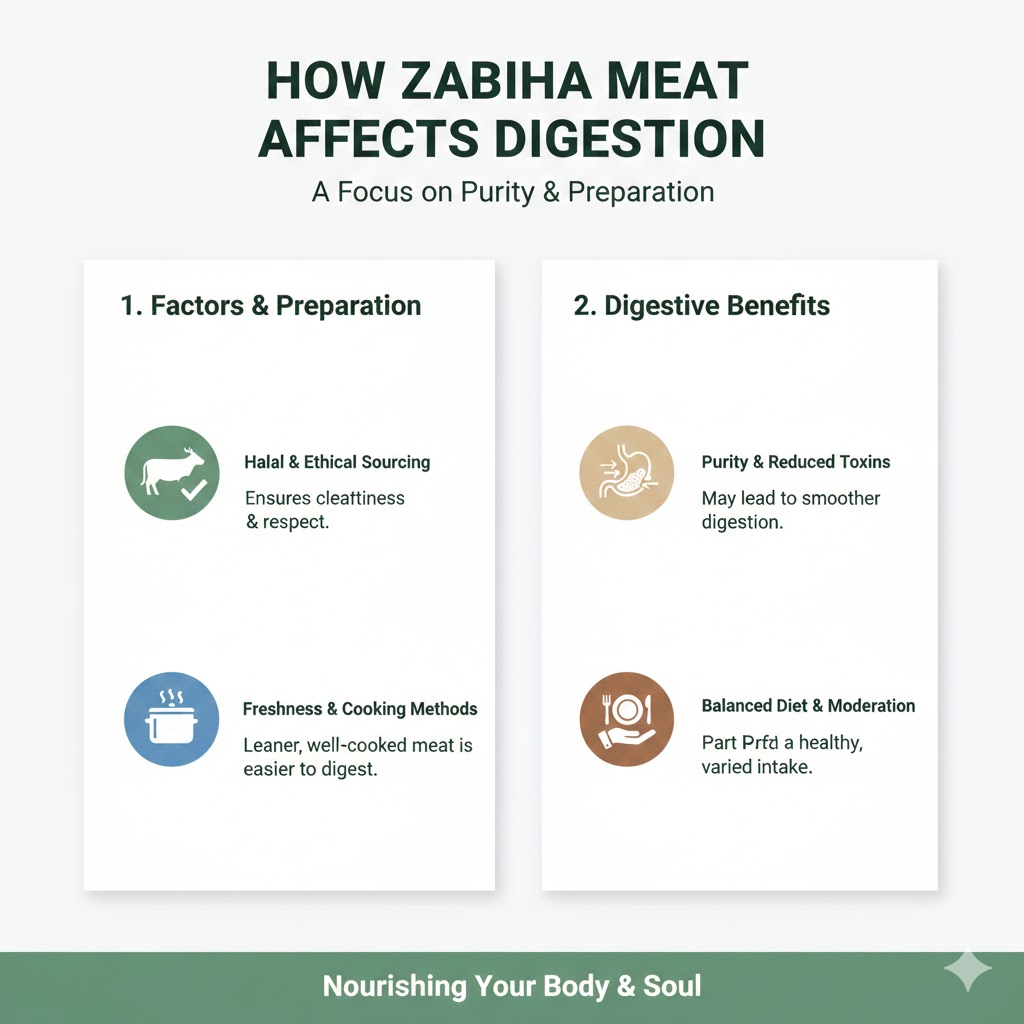
How Zabiha Meat Affects Digestion

Zabiha meat, prepared according to halal standards, is not only ethically sourced but also widely valued for its nutritional benefits and quality protein content. While many enjoy its rich flavor and tender texture, understanding how Zabiha meat affects digestion is important for maintaining gut health, nutrient absorption, and overall wellness. Proper cooking methods, portion sizes, and pairing with other foods can make a significant difference in how easily your body digests and utilizes the nutrients in meat.
This guide explores the digestive aspects of Zabiha meat, factors that influence digestion, and practical tips for making it easier on the stomach.
1. Nutritional Composition of Zabiha Meat
Zabiha meat contains several nutrients that directly impact digestion:
-
Protein: Essential for muscle repair, immune function, and satiety.
-
Fat: Provides energy, helps absorb fat-soluble vitamins, and influences stomach emptying.
-
Minerals: Iron and zinc support red blood cells and enzymatic activity in the digestive system.
-
Low carbohydrate content: Meat is naturally carb-free, making it easy to digest for many.
The balance of protein and fat, particularly in lean cuts, plays a crucial role in how long it stays in the stomach and the digestive effort required.
2. Factors Affecting Digestion of Zabiha Meat
Several factors determine how easily Zabiha meat is digested:
a) Cut and Fat Content
-
Lean cuts like chicken breast, lamb loin, and beef sirloin digest faster and are lighter on the stomach.
-
Fatty cuts like ribeye beef or lamb rib chops take longer to digest because fat slows gastric emptying.
b) Cooking Method
-
Grilled, baked, or steamed meat tends to digest more easily than fried or heavily sauced meat.
-
Slow-cooked stews break down connective tissue, making meat softer and easier to digest.
c) Portion Size
-
Smaller, balanced portions reduce digestive strain. Overeating rich, fatty meat may cause bloating or discomfort.
d) Pairing Foods
-
Combining Zabiha meat with fiber-rich vegetables, whole grains, or legumes aids digestion and promotes healthy gut function.
-
Avoiding excessive fried sides or creamy sauces helps the stomach process the meal more efficiently.
3. Protein and Digestion
Zabiha meat is rich in complete protein, which supports bodily functions but requires enzymatic activity for breakdown:
-
Enzymes like pepsin in the stomach help break down protein into amino acids.
-
Lean cuts require less stomach acid and energy to digest than high-fat cuts.
-
Pairing with herbs like ginger, mint, or fennel can aid digestion and reduce bloating.
Eating slowly and chewing thoroughly allows enzymes to work efficiently, improving nutrient absorption.
4. Fat and Digestion
Fat in Zabiha meat affects digestion in several ways:
-
Fat slows stomach emptying, meaning it stays longer in the digestive tract. This can be beneficial for satiety but may feel heavy if consumed in large amounts.
-
Moderate fat content enhances flavor and texture while providing energy.
-
Leaning toward cuts like chicken breast, trimmed lamb, or sirloin beef ensures easier digestion.
Cooking methods such as grilling, roasting, or steaming help minimize excess fat, making meals lighter and easier on the digestive system.
5. Common Digestive Experiences
Some people may experience digestive discomfort from meat due to:
-
Overconsumption of fatty cuts
-
Eating too quickly or not chewing thoroughly
-
Combining meat with heavy fried sides
-
Underlying digestive conditions, such as acid reflux or IBS
For most healthy individuals, moderate portions of lean Zabiha meat cooked using healthy methods are easy to digest and highly nutritious.
6. Tips to Improve Digestion of Zabiha Meat
-
Choose lean cuts when possible to reduce digestion time.
-
Cook meat thoroughly using steaming, baking, grilling, or slow-cooking.
-
Incorporate vegetables like spinach, carrots, or bell peppers to add fiber.
-
Avoid heavy, creamy sauces or deep-frying, which slow digestion.
-
Chew slowly and mindfully to help enzymes break down protein efficiently.
-
Pair with digestive herbs such as mint, ginger, or coriander to ease stomach activity.
These small adjustments can help your meals feel lighter while improving nutrient absorption.
7. Benefits of Properly Digested Zabiha Meat
-
Efficient protein absorption: Supports muscle repair and immune function.
-
Stable energy levels: Lean Zabiha meat provides sustained energy without digestive heaviness.
-
Balanced nutrition: Combines high-quality protein, iron, zinc, and essential fatty acids.
-
Satiety: Properly prepared meat keeps you full longer, reducing the likelihood of overeating.
Eating Zabiha meat in a balanced way supports digestive health and overall wellness.
8. Health and Safety Considerations
-
Cook Zabiha meat to safe temperatures (chicken 165°F / 74°C, beef/lamb 145–160°F).
-
Store meat properly in the refrigerator or freezer to prevent bacterial growth.
-
Avoid repeated thawing and refreezing to maintain freshness and digestive tolerance.
-
Serve with complementary fiber and light sides for easier digestion.
Safe handling and mindful cooking maximize both digestibility and nutrition.
Conclusion
Zabiha meat, when prepared and consumed correctly, is easily digestible, nutritious, and satisfying. Lean cuts, moderate portions, and healthy cooking methods like grilling, steaming, or slow-cooking enhance digestibility and preserve nutrients. Pairing meat with vegetables, whole grains, and digestive-friendly herbs further improves gut comfort and nutrient absorption.
By understanding how Zabiha meat interacts with digestion, home cooks can enjoy wholesome, flavorful meals that support overall health, energy, and family nutrition — all while honoring halal practices.