Why Zabiha Meat is Healthier Than Regular Meat

Zabiha meat, prepared according to halal standards, is widely recognized not only for its ethical and religious significance but also for its health advantages. While many people enjoy meat daily, understanding what makes Zabiha meat different from conventional meat can help families make informed, nutritious choices. From its strict slaughtering methods to higher quality protein and reduced fat content, Zabiha meat provides multiple benefits that contribute to overall wellness.
This guide explains why Zabiha meat is often considered healthier than regular meat, including its nutritional profile, ethical handling, and impact on digestion and cooking outcomes.
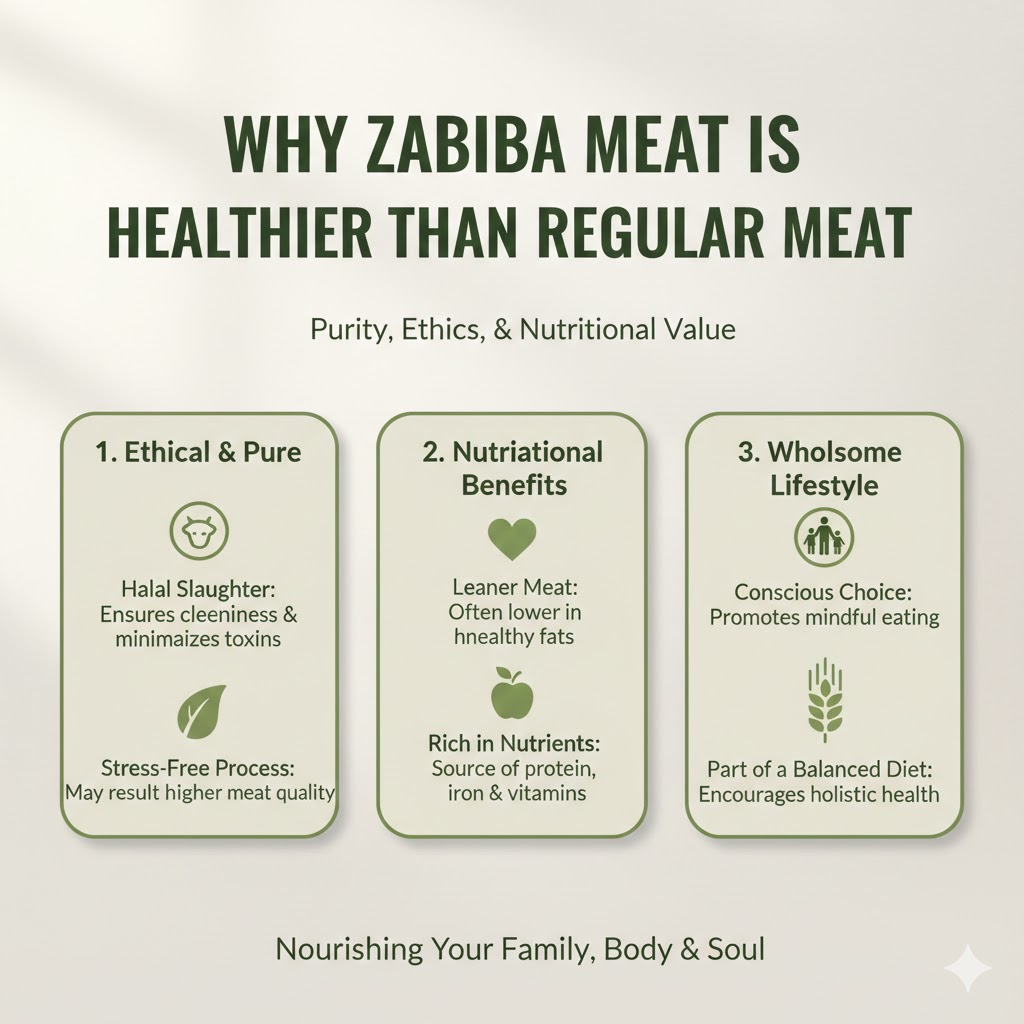
1. Ethical and Hygienic Slaughtering
One of the key factors that sets Zabiha meat apart is the method of slaughtering:
-
Animals are slaughtered by a swift cut to the throat, severing major arteries while minimizing stress.
-
Only healthy, conscious animals are chosen, which ensures fresher, higher-quality meat.
-
The process follows strict halal guidelines, emphasizing cleanliness, hygiene, and the absence of chemicals or artificial enhancements.
Why it matters for health: Meat from less-stressed animals has lower levels of stress hormones and toxins, making it safer and healthier to consume.
2. Reduced Fat and Superior Nutritional Profile
Zabiha meat often comes from animals that are:
-
Grass-fed or naturally raised, resulting in leaner cuts.
-
Raised without unnecessary growth hormones, making fat content more natural.
-
Processed minimally, avoiding excessive preservatives or additives.
Health benefits compared to regular meat:
-
Lower levels of saturated fat, particularly in lean cuts.
-
Higher content of essential fatty acids like omega-3, especially in grass-fed lamb and beef.
-
Rich in high-quality protein, vitamins, and minerals, including iron, zinc, and B vitamins, which are essential for energy and immunity.
Choosing Zabiha meat can help maintain a balanced diet without sacrificing flavor.
3. Stress-Free Animals Lead to Healthier Meat
The welfare of the animal before slaughter impacts meat quality:
-
Zabiha guidelines ensure animals are treated humanely, with access to adequate food, water, and space.
-
Stress in animals increases cortisol and other stress hormones, which can affect the nutritional and chemical composition of meat.
Healthier, ethically raised animals produce meat that is more tender, nutrient-dense, and digestible, giving Zabiha meat a clear advantage over conventionally processed options.
4. Cleanliness and Minimal Contamination
Zabiha meat is handled under strict hygiene rules:
-
The blood is fully drained during slaughter, which reduces bacterial contamination and helps prevent spoilage.
-
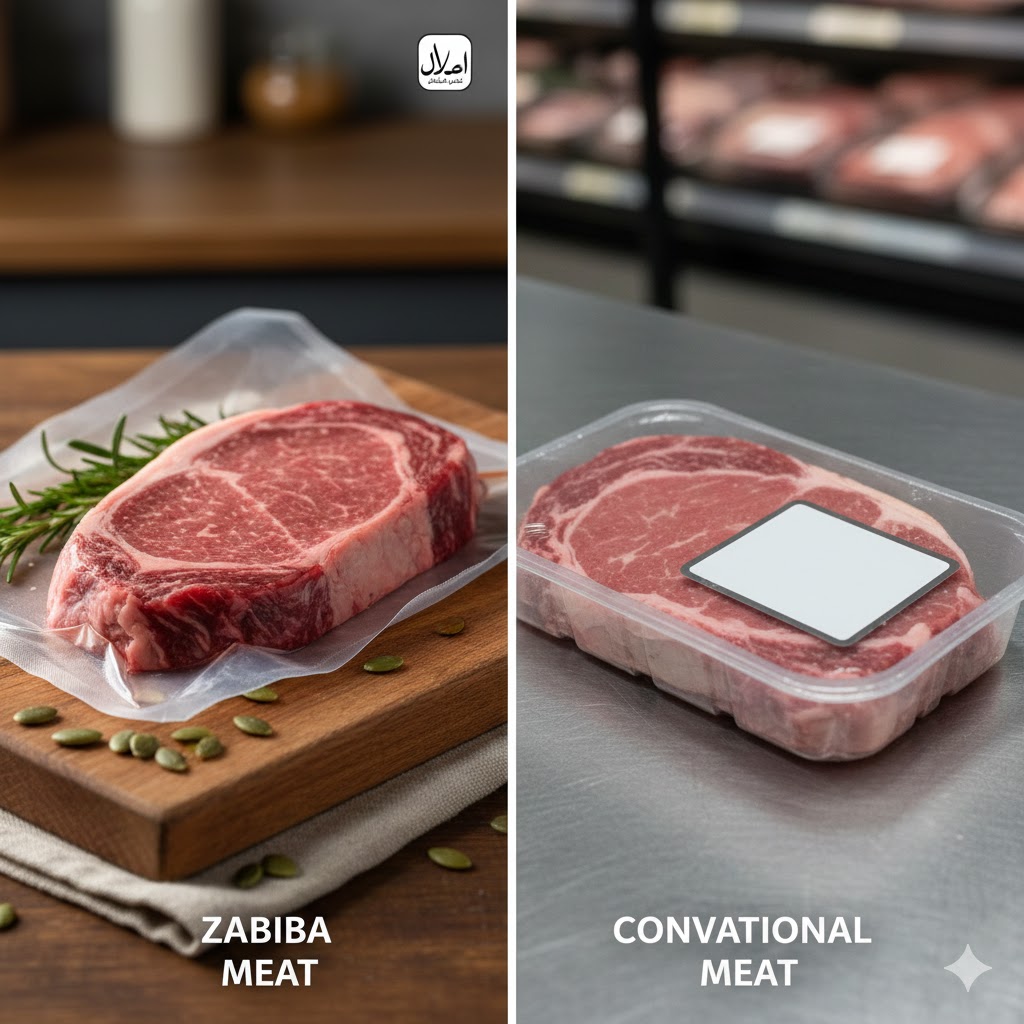
Meat is typically processed and packaged under strict halal standards, minimizing exposure to harmful additives.
Compared to some regular meat, which may involve chemical preservatives or prolonged storage, Zabiha meat is fresher and safer for digestion.
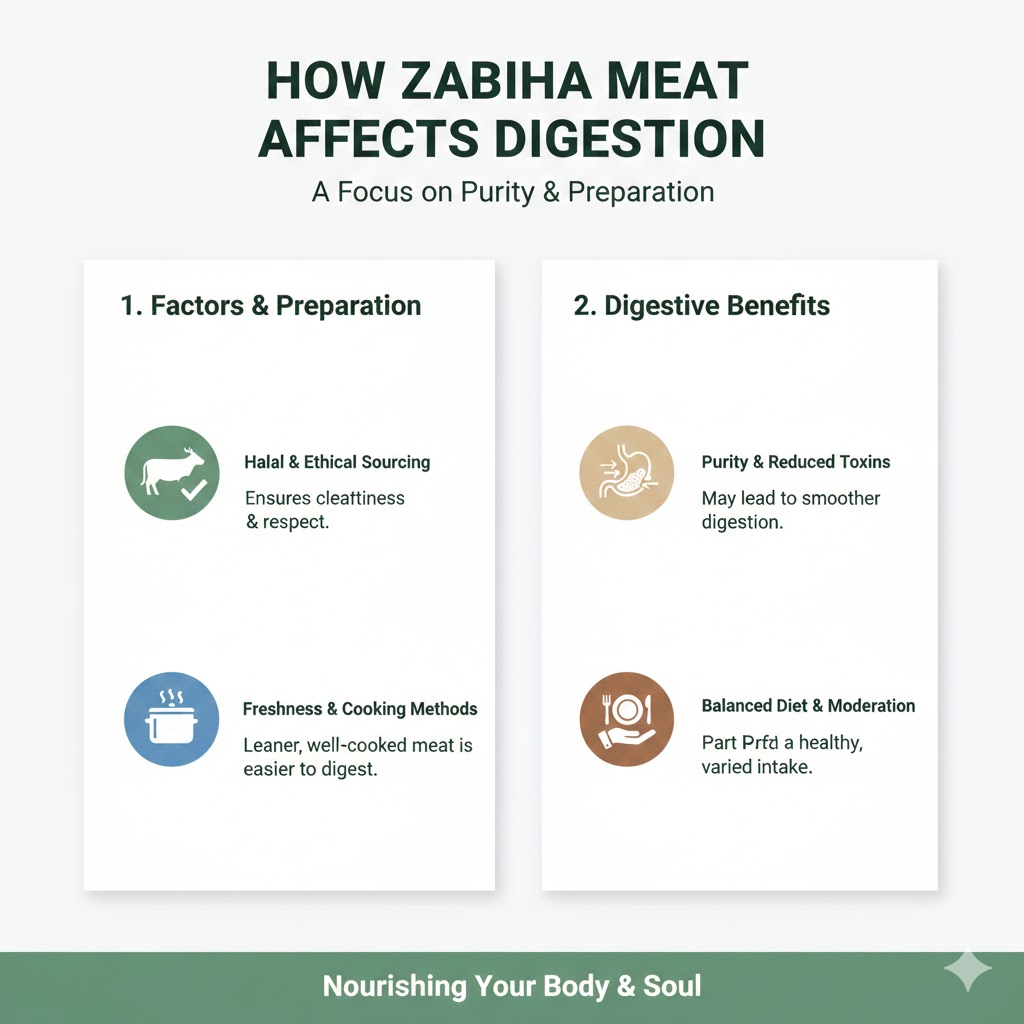
5. Easier Digestion
Due to leaner cuts and proper handling, Zabiha meat is often easier on the digestive system:
-
Lean cuts digest faster than fatty, heavily processed meats.
-
Properly cooked Zabiha meat retains its natural nutrients without creating excess oils or unhealthy compounds.
-
Pairing with fiber-rich vegetables or whole grains enhances digestion further.
This makes Zabiha meat a gentle yet nutritious protein source for both children and adults.
6. Benefits in Cooking and Nutrient Retention
Zabiha meat responds well to healthy cooking methods:
-
Grilling, baking, steaming, or slow-cooking preserves vitamins and minerals.
-
Lean cuts produce less grease, reducing the need for additional oils or fats.
-
Rich natural flavors mean fewer heavy sauces or additives are required.
Cooking Zabiha meat carefully ensures maximum nutrition with minimal caloric load, compared to some conventionally processed meats that require masking flavors with oil or sauces.
7. Minimal Exposure to Hormones and Antibiotics
Animals raised for Zabiha meat are often free-range or naturally raised, meaning:
-
Fewer or no growth hormones.
-
Limited antibiotic use, reducing the risk of antibiotic residues.
-
Meat is closer to its natural nutritional profile, making it safer for long-term health.
Regular meat, particularly from large-scale industrial farms, may contain hormone or antibiotic residues, which can have subtle but long-term health implications.
8. Mental and Spiritual Wellness
While not strictly nutritional, consuming Zabiha meat offers psychological and spiritual benefits:
-
Knowing the meat comes from ethical, humane sources promotes conscious eating.
-
Aligning food choices with religious and ethical standards can improve mindful eating habits, reducing overeating and encouraging healthier meal planning.
Eating Zabiha meat supports a holistic sense of wellness, combining physical nutrition with ethical responsibility.
Conclusion
Zabiha meat is healthier than regular meat due to its ethical sourcing, superior nutritional profile, low fat content, and easier digestibility. Proper handling and slaughter ensure minimal contamination, while lean cuts retain essential nutrients without excessive calories.
By choosing Zabiha meat, families can enjoy high-quality protein, essential vitamins and minerals, and naturally flavorful meat prepared in a health-conscious and ethical manner. Whether served as a stew, grilled dish, or curry, Zabiha meat provides wholesome, nutrient-rich meals that nourish both body and conscience.